

Legacy feeds NC’s resilient life sciences supply chain growth
North Carolina’s long history of supply-chain savvy is paying big dividends in its global life sciences leadership positioning.
The state has earned about $16 billion in announced life sciences investments since 2024. A workforce of 76,000 continues to grow at more than 860 companies statewide. That includes 124 international companies from 26 countries. Another 2,500 support company sites, including 77 that provide life sciences supply-chain services, employ tens of thousands more across the state.
North Carolina’s core life sciences strengths include biopharma manufacturing, contract research and testing, R&D, regenerative medicine and agtech. This blend of critical mass and diversity fuels the state’s growth across these sectors, undergirded by its burgeoning supply-chain ecosystem.
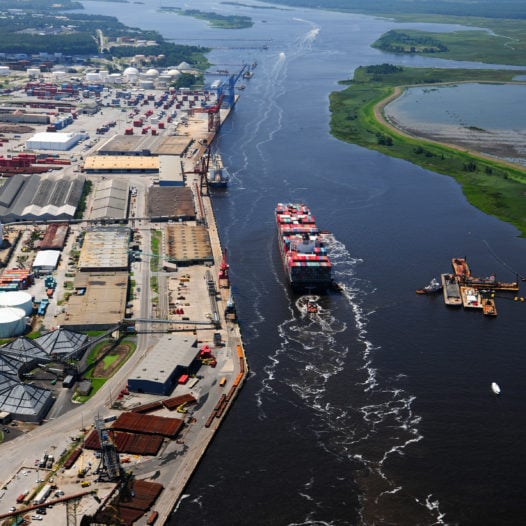
North Carolina became known as the Tar Heel State because its first successful industries revolved around its Atlantic Ocean waterfront - 3,375 coastline miles, counting the Outer Banks. Its natural resources served naval stores. Those included tar, pitch, turpentine and timber for shipbuilding. Then came tobacco, cotton and, by extension, textiles. And further inland, furniture came from its forests.
These early successes established the state as a global multi-industrial supply chain leader well before the term “supply chain” was coined.
Every industry's supply chain is a network of organizations, people, activities, information, and resources working together to create, store and deliver its products and services. From the initial sourcing of raw materials to the final delivery to the end customer, it's the comprehensive system that moves a product through production, procurement, manufacturing, storage, and distribution, ensuring it gets to the consumer efficiently and safely.
Multiple players working as a team
A successful supply chain today requires raw-material producers to provide the basics; businesses to step in with any needed components to balance cost, quality and market forces; manufacturers to transform those fundamentals into finished, packaged goods; and warehousing and logistics specialists and carriers to guarantee safe and secure storage and distribution of finished products to customers.
Today, North Carolina’s unique mid-Atlantic life sciences supply-chain ecosystem includes:
- World-class universities with their sophisticated science-based overlays
- A globally revered statewide community college-based workforce training system: the 58 colleges include specialized, affordable curricula giving students in all 100 North Carolina counties the tools required for success in life, including life sciences careers emphasizing pharmaceutical manufacturing
- Four international airports: Charlotte Douglas, Piedmont Triad, and Raleigh-Durham international airports handled 99% of the state’s air cargo activity as of 2023. Wilmington is likely to revise that balance as the latest airport to provide connectivity to domestic and international life sciences markets and integrate with the state’s surface transportation system
- Cold storage infrastructure at the major deep-water port in Wilmington.
- 90,000 miles of national lifeblood highways
- 3,200 miles of railroads, including the Class 1 operations of Norfolk Southern Railway and CSX Transportation, as well as 24 short-line railroads
In the life sciences, especially those involving medical and agricultural products and activities, policy and regulatory complexities are exponentially greater than those encountered by most other industries. That’s another key factor that makes North Carolina’s supply chain evolution story special.
Temp control for life sciences supply chain
Many North Carolina life sciences manufacturers, including agricultural, animal health and human therapeutics, make temperature-sensitive tissues, cell therapies and biologics that require specialized cold-chain services to protect their products and guarantee safety.
A prime example of the state’s cutting-edge life sciences supply-chain infrastructure meeting those needs is GXP-Storage, a pioneering Contract Service Organization (CSO) founded in Virginia in 1978 that moved its international headquarters to the Eastern North Carolina town of Middlesex in early 2024.
GXP bought a 62,500-square-foot shell building in Nash County’s Middlesex Corporate Centre, where it is putting the final touches on its $81 million headquarters to provide biorepositories and lifecycle management for regulated human, animal and plant research, clinical trial and manufacturing material.

“We provide the regulated materials management infrastructure that enables North Carolina's 840-plus life sciences companies to focus on innovation rather than storage complexity,” explained CEO Jeff Johnson.
“Our role bridges research, manufacturing, and distribution -- providing the ‘at-rest’ foundation that complements logistics providers' ‘in-transit’ capabilities, to create end-to-end supply chain resilience. We provide a seamless, auditable chain of custody for our clients’ materials.”
Johnson said GXP facilities comply with the full range of “Good Practice” rules, a commitment that led to the company name of GXP. The offerings include traceability and care of materials ranging from 21 degrees C to 150 degrees below zero C.
The GXP site currently has 20 employees, Johnson said, though he’s hiring with a plan for 75 people to work in the initial building, which includes over 200,000 cubic feet of storage. He said GXP has first rights of refusal for adjacent ready-to-build parcels, each of which he expects to also house 75 workers.
“The top five people on our team have over 100 years of experience in this field,” said Johnson. “We’re descendants of the original bio-storage industry. A few decades ago, the companies doing research and development of regulated products for humans, plants and animals did all these things within their own facilities. But as the regulatory framework continued to get more complex, it became more efficient to outsource various aspects of the pipeline to professionals who specialize in those aspects, such as contract research, manufacturing, storage and logistics.”
The GXP site feeds into a surge of biomanufacturing activity in the state’s Eastern Region. The region scored $7.1 billion of the state's $10.8 billion in new life sciences investments announced in 2024 and 2025, along with 2,600 of the 4,500 new jobs announced statewide.
The commitments came from global giants like Novo Nordisk in Clayton, Johnson & Johnson and Reckitt, in Wilson, and Nipro Medical in Greenville.
"Eastern North Carolina has become a global magnet for biomanufacturing," said Mark Phillips, vice president of statewide operations and regional director for the North Carolina Biotechnology Center's Eastern region. “The groundwork has involved many years of planning, partnerships and preparation. And its success has been helped greatly by excellent support services, including those from leading supply chain providers like GXP.”
Phillips also serves on GXP’s advisory board.
Wilmington - sea, land and air expansions
About 130 miles south of Middlesex is another landmark facility in the southeastern port city of Wilmington.
Frontier Scientific Solutions is preparing to open ILM Depot 1, a 530,000-square-foot temperature-controlled logistics facility at Wilmington International Airport (ILM) that will soon become North America’s largest current Good Manufacturing Practices (GMP) temperature-controlled logistics hub.

The facility can accommodate some 58,000 pallets of temperature-controlled storage across multiple environments, from controlled room temperature to refrigerated, frozen and ultra-low temperatures. It will also offer streamlined customs processing with a Foreign Trade Zone designation, along with federal Transportation Security Administration screening capabilities that will allow for duty deferral and operational efficiencies vital for the secure storage, transportation and distribution of life sciences products across international borders.
Frontier and Air Transport Services Group Inc. also recently announced a strategic partnership that creates a dedicated air transport system for life sciences customers, ensuring continuous temperature control and full shipment integrity from origin to delivery. Frontier’s Transportation Services Group (TSG) will be tasked with managing dedicated, life-sciences-specific air and ground lanes, including international routes connecting Wilmington to Europe and beyond.
Frontier’s Wilmington hub will anchor North American operations, and a companion site in Shannon, Ireland, will handle activities in Europe, the Middle East and Africa. Together, they represent a $1.5 billion investment by GID, a privately held Boston-based commercial real estate company.
Steve Uebele, Frontier’s chief executive officer with more than 35 years in the industry, said the company expects to have the new facility operational in early 2026. He said it will continue operations from its Depot 805 in the city of Wilmington, which “already supports pharmaceutical, biotech, and advanced materials customers.”
“Our ILM Depot 1 and our air-transport system add scale, speed, and certainty,” said Uebele. “Companies will be able to move sensitive materials directly from aircraft to controlled storage in minutes, not hours or days. They can consolidate global inventory closer to manufacturing and clinical sites, reduce risk in transit, and design supply chains around predictability instead of contingency planning. In simple terms, we move life-sciences logistics from ‘managed risk’ to engineered certainty.”

Because ILM Depot 1 supports four to six levels of racked storage, it provides “approximately 18 to 20 million cubic feet of controlled storage capacity across ambient, refrigerated, frozen, and ultra-cold environments,” Uebele said.
“More importantly than the raw number, the facility was built for high-density, validated vertical storage, not generic warehousing. Every cubic foot is designed to be usable under GMP conditions, with validated airflow, temperature mapping, and monitored access.”
Uebele and his team have worked closely with Randall Johnson, executive director of NCBiotech’s Southeastern Office, as Frontier has grown in the community. It already operates a 60,000-square-foot facility minutes away from ILM. Uebele said the company is hiring in preparation for bringing the new ILM facility online.
“We expect to support well over 100 high-quality jobs in Wilmington as Depot 1 and TSG scale,” said Uebele, “including operations, quality, engineering, logistics, and transportation roles. Many of these are specialized positions tied directly to North Carolina’s life sciences ecosystem.”
Uebele said Frontier is “designed for scale and growth.”
“For both a global pharma company and a fast-growing agtech startup, Frontier can support early-stage programs and scale seamlessly without forcing a network redesign later. Frontier is not just a place to store product. It’s infrastructure for growth. We help companies design supply chains that will still work for five and 10 years."
NCBiotech’s Johnson said he’s excited about the regional contribution to the state’s award-winning life sciences growth trajectory. “The new Frontier depot about to open at the airport site, coupled with this valuable Ireland air link and significant cold storage and other upgrades at the Port of Wilmington, put Southeastern North Carolina squarely on the map as a major life sciences supply chain and logistics hub,” he said.
Further inland, LifeScience Logistics is among the growing life sciences supply chain specialists in the Research Triangle area. The Dallas-based corporation has 19 locations in 11 states, including three Triangle-area facilities offering a total of 708,290 square feet of cold-chain and FDA-registered, cGMP-compliant storage.
Traditional transport, storage firms are links in chain
Mid-state, one of America’s largest over-the-road less-than-truckload transport companies, Old Dominion Freight Lines, is headquartered in the Triad’s Thomasville. It provides expedited on-demand shipping and tracking services and guaranteed delivery windows nationwide.
Highway transport remains the dominant method for moving goods in North Carolina. According to a 2023 report from the transportation engineering and architecture firm HNTB, it represents about 83% of the total freight tonnage handled across all transportation modes, including inbound, outbound, internal, and transit shipments within the state.
But alternatives are also significant. For example, only 25 miles north of Thomasville is a bustling FedEx regional hub that has bolstered the Piedmont Triad International Airport’s reputation as the leading cargo airport in the state.
And it’s able to tap into FedEx’s broader healthcare logistics system, offering precise temperature-controlled, real-time tracking for pharma and life sciences air shipments worldwide, from raw materials to finished products.
FedEx operates more than 90 cold chain facilities across five continents, logging some 32,000 flights per month.
A study team from North Carolina State University and the North Carolina Department of Transportation spent months evaluating data to issue a comprehensive 86-page report on the state’s supply chain impact in 2024. The report included data from other key business sectors as well as those involving the life sciences. And it provides a snapshot of the supply chain’s growing importance:
“The strength of its supply chain positions North Carolina as a world leader in international trade, supporting a diverse economy with exports ranging from machinery to chemicals. In 2023, North Carolina exported a total of $42.2 billion, making it the 15th largest out of the 53 exporters in the United States — a 23 percent increase from its pre-pandemic level in 2019.”
GXP’s Johnson said he has traveled to most of the major life sciences clusters around the world, except, so far, to China, Russia and Brazil.
“We don’t believe there’s any regulated research, manufacturing and material management cluster in the world that’s bigger and more integrated in a multi-layered ecosystem than North Carolina,” he said.
“It’s incredible what’s here. It’s like a utility that you plug into. It’s the workforce, for sure. But it’s also the infrastructure that instills trust that we have what it takes to make sure there’s safety and efficacy in all these regulated products.”