

Life sciences companies seeking NC military veterans
It’s hard to find an employer that won’t consider military veterans when looking to fill jobs with skilled, dedicated and hard-working employees.
But that doesn’t mean hiring a veteran is a slam dunk. Employers and job candidates both have to do their part to make the arrangement work, said speakers at a recent workshop on employing veterans.
For employers, that means helping veteran job candidates understand corporate language and customs. For job-seekers, that means translating military skills and experiences into attributes that employers value.
“We have started to work with our hiring managers to teach them exactly what transferable skills they can look for” in candidates who have military experience, said Nicole Niwa, alliance development and social responsibility principal at Novo Nordisk, with operations in Clayton and Durham.
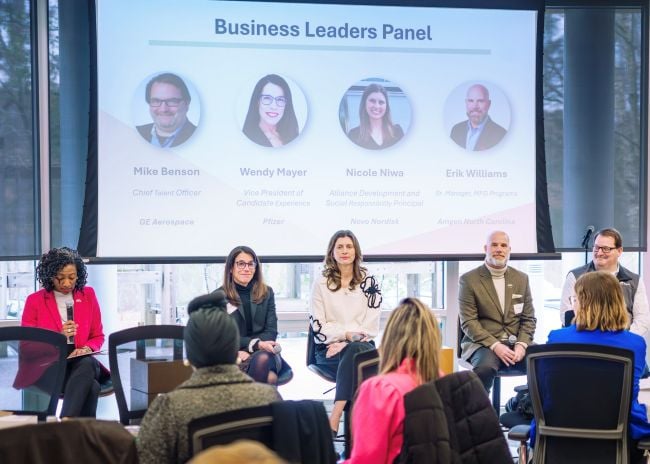
Niwa discussed Novo Nordisk’s approach during a panel discussion at the North Carolina Veterans and Military Spouse Talent Roadshow, held at the North Carolina Biotechnology Center. The North Carolina Department of Military and Veterans Affairs is conducting a statewide tour to promote the hiring of veterans and their spouses.
Employers in attendance heard about the benefits of hiring veterans, how to evaluate military experience and its fit for private-sector positions, and how to tap into programs that help match employers and veterans. The NC Chamber provided breakfast.
Recognizing military experience
Panelists agreed that employers should do more to recognize that military experience, while often hard to compare to corporate jobs, is transferable.
One suggestion is for employers to designate someone in the human resources department to develop an understanding of military roles.
“Even if it’s not a formal role by title, have someone within your HR department be the translator and help you understand what this [military] resume means and what the words behind the resume actually mean,” said Jocelyn Mitnaul Mallette, secretary of the state’s Department of Military and Veteran Affairs. She served as moderator for the panel.
Technical positions across a variety of industries represent good opportunities for veterans, added Mike Benson, chief talent officer at GE Aerospace, which has facilities in Durham, Wilmington, Asheville and West Jefferson. He challenged his fellow hiring managers, recruiters and HR professionals to become more aware of what veterans bring to the workplace.
“The onus can’t just be on the veteran or spouse to explain it,” he said. “Hiring leaders have to get smarter, and we have to find ways to help them get smarter.”
At the same time, veterans need to be clear that their leadership, management, technical and financial skills honed in the military are exactly what employers are looking for, even if job responsibilities and descriptions don’t always align.
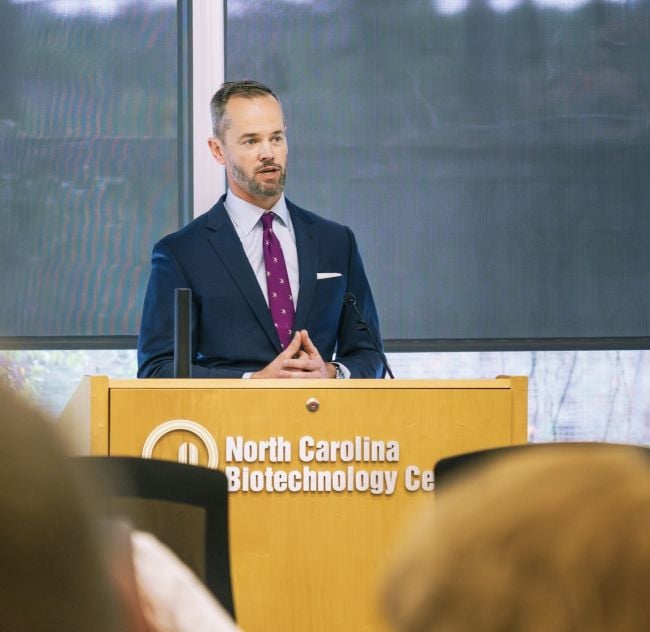
Benson told one story about a former officer with 30 years of experience failing a job interview because the employer was looking for profit-and-loss accountability. Yet the officer, who said he didn’t have P&L experience, actually had direct oversight of a $2 billion annual budget. He failed to mention it because he took a narrow, corporate view of the word “profit.”
Filling critical needs in life sciences
For life sciences companies in North Carolina, the sector’s rapid growth is creating more opportunities to hire veterans. As a result, more state and federal programs are now available to help match veterans with job openings and encourage employers to seek and consider candidates with military experience.
One such program is NCBiotech’s Military Outreach and Veterans Engagement (MOVE) program. MOVE helps transitioning service members, veterans and military spouses find careers in life sciences. In addition to supporting the event, Novo Nordisk, Pfizer and Amgen are MOVE industry partners.
“There’s not a soul in here who doesn’t want to help veterans,” said MOVE director Jacob Key, who gave a presentation at the veterans event. “But you guys are busy. You’re making medicine. We’ve got to simplify the process for you to make it make sense.”
Panelists said their companies are eager to talk to veterans.
“The critical skills that veterans bring are directly aligned to what we see as top talent and great fits for Pfizer,” said Wendy Mayer, vice president of corporate experience at Pfizer. “For North Carolina in particular, 12 percent of Pfizer’s U.S. workforce is in North Carolina. So this is a very important state for us.”
Mayer said hiring managers at Pfizer look for four key attributes in job candidates:
- People who are highly motivated, as well as specifically motivated by the company’s purpose
- Alignment with Pfizer’s core values
- Leadership behaviors
- Skills for the role
And veterans bring unique experiences that few candidates without a military background possess, said Erik Williams, senior manager of manufacturing programs at Amgen North Carolina in Holly Springs.
“Make no mistake, my job in biotech and the roles I have had over the years have been very, very challenging,” he said. “But one thing I can tell you for sure is I never had to do my biotech job out in the pouring rain. I never had to do it out in this freezing cold. And I certainly never had to do my biotech job with bad guys trying to get me."
“These are all stresses and experiences that so many of our service families have experienced. So when you give them a biotech job, it’s going to be a piece of cake.”