

Plant Sciences Initiative at NC State a key player in global research program to accelerate agtech start-ups
This summer’s soaring temperatures, raging wildfires, record-setting droughts and major flooding have affected millions of people around the world, demonstrating the devastating effects of climate change. For farmers, extreme climate conditions are driving lower crop yields and less nutrient-dense products. Meanwhile, costs are increasing for vital inputs such as fertilizer and fuel.
The good news: Agricultural biotechnology innovators are developing potential solutions to these and other industry challenges. In North Carolina alone, there are more than 180 agtech companies and hundreds of world-class agtech scientists.
More good news: The North Carolina Plant Sciences Initiative (PSI) at North Carolina State University has been selected as one of only two U.S. research hubs to collaborate and advance promising agtech companies seeking to overcome these challenges. The other hub is the University of California Agriculture and Natural Resources Innovate (UC ANR).
Solving 'grand challenges'
The researchers are working with the first cohort of companies selected for the HARVEST AgTech program, a global technology validation platform led by the Yield Lab Institute (YLI) in St. Louis. Cohort companies were selected through a competitive, independent evaluation process, with each company receiving funding specifically to support their commercialization efforts through research projects with either university partner.
“The launch of our first HARVEST cohort marks an exciting new chapter for ag-tech innovation,” said Stephanie Regagnon, YLI’s executive director, in announcing the launch. “Through this new platform, we are bringing together entrepreneurs, scientists and industry leaders to accelerate the development of next-generation tools and technologies that farmers and food systems urgently need. This inaugural cohort, focused on biological solutions, reflects the extraordinary breadth of innovation emerging across agriculture today.”
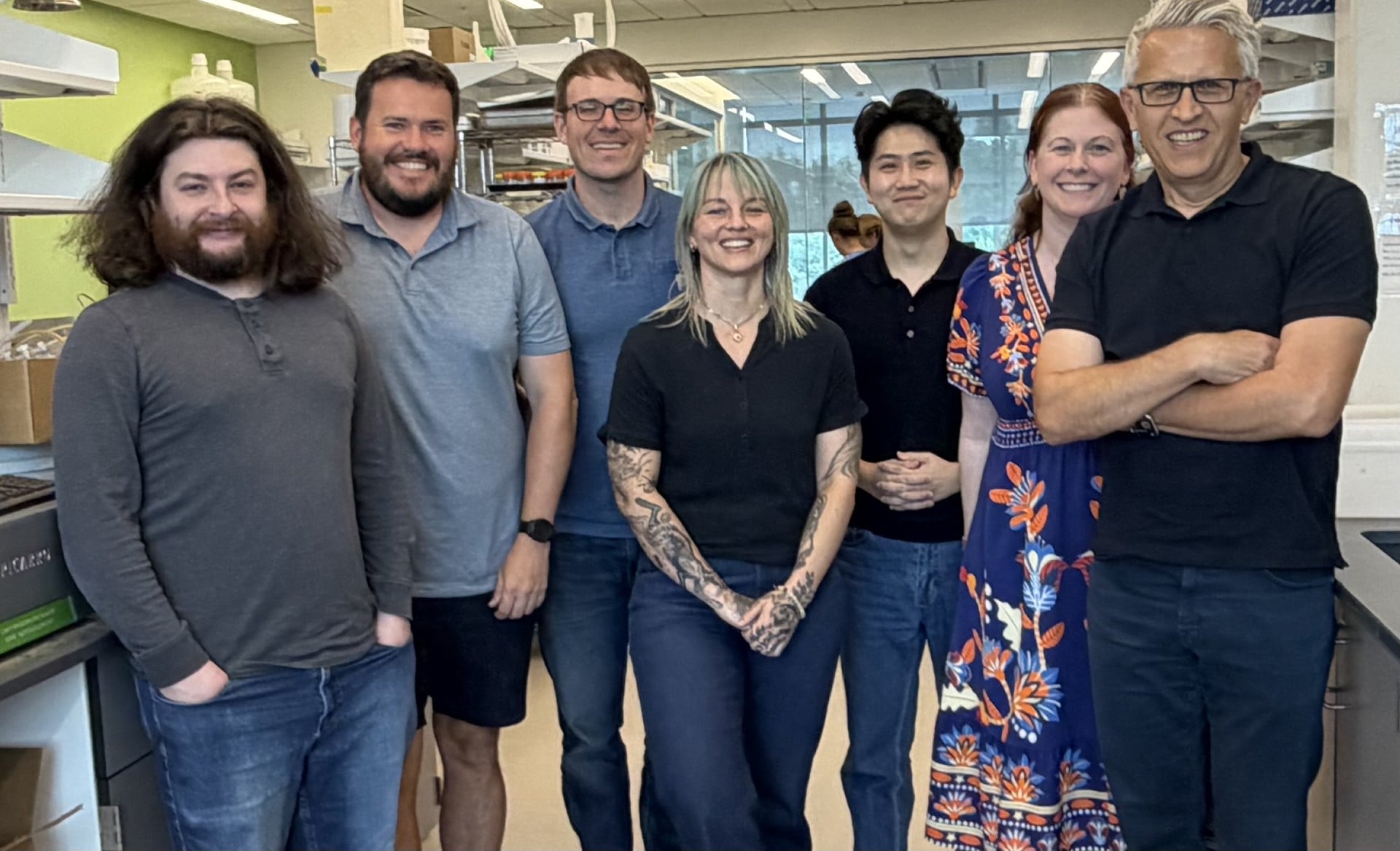
N.C. PSI’s participation in the HARVEST program aligns closely with its mission to solve grand challenges in agriculture and the environment through interdisciplinary science, workforce development and partnerships.
“Through HARVEST AgTech, we get to work with innovative technologies that can make a big difference for farmers,” said Adrian Percy, N.C. PSI’s executive director. “It’s a way to speed up the process of effectively moving these technologies from the testing lab to the farm and into growers’ hands as quickly as possible.”
HARVEST represents the next evolution of the Wells Fargo Innovation Incubator’s (IN2) ag-tech program, a $55 million initiative that has supported 77 startups, catalyzed more than $3 billion in follow-on funding and generated 18 successful company exits. The new program builds on this proven foundation while expanding the program’s global reach and technical partnerships.
“NCBiotech has supported the HARVEST model for years,” said Paul Ulanch, NCBiotech’s senior director of focused initiatives. NCBiotech was part of the original IN2 effort, led by the National Renewable Energy Lab.
As a HARVEST ecosystem partner, NCBiotech continues to support the HARVEST program today, he said. “It has allowed us to recognize innovative companies and nominate them for consideration,” Ulanch said.
He congratulated N.C. PSI on well-deserved recognition as one of the technical partner research hubs for the first HARVEST cohort. “The result of leveraging the N.C. PSI’s interdisciplinary, basic and field research capabilities will assist cohort companies to further advance their innovation to add value to agriculture,” Ulanch added.
Pluton, Prospect in first cohort
N.C. PSI faculty affiliates and staff members are working with two companies in the cohort: Pluton Biosciences, based in St. Louis, and Prospect Growth, of Newton, MA.
Pluton Biosciences’ sun-powered microbial systems deliver agronomically relevant amounts of nitrogen and improve phosphorus availability during plant growth, helping growers strengthen nutrient programs. Pluton Biosciences’ solutions support resilient crop production and reduce dependence on volatile global input supply chains.
Prospect Growth uses nanoscale material engineering to develop and manufacture more efficient fertilizers. Their goal is to help growers increase farm profitability and reduce nutrient inputs. Modern agriculture depends on synthetic fertilizers, yet most formulations have seen little change in decades. Prospect Growths' technology could change that.
Adam Blaszczak, Ph.D., Pluton Biosciences’ vice president of research and development, met recently with the PSI team for a project kick-off meeting in NC State University’s Plant Sciences Building. He described the opportunity to work with such advanced science at N.C. PSI as a “match made in heaven.”
“We had already been very interested in soil and nutrient research being conducted by two N.C. PSI scientists: Alex Woodley, Ph.D., and Mallory Choudoir, Ph.D.,” Blaszczak said, making the HARVEST opportunity “amazing.”
Woodley is associate professor of crop and soil sciences. His research looks at soil productivity and profitability in sustainable and organic cropping systems. Choudoir, assistant professor and extension specialist in Microbiology, is in the plant and microbial biology department and focuses on the ecological and evolutionary processes driving plant-soil-microbe interactions in agroecosystems. Woodley serves as principal investigator for the Pluton Biosciences project; Choudoir is PI for the Prospect Growth project. Each will also support the other project.
Woodley sees the Pluton project as an opportunity to improve nitrogen-loss pathways, reducing harmful environmental effects. Nitrogen, one of the main components of fertilizer, promotes plant growth and enhances crop yield. As nitrogen is broken down by soil microbes, it becomes nitrous oxide, a potent greenhouse gas that contributes to climate change. “About 75 percent of nitrous oxide in the atmosphere comes from fertilizer,” Woodley said. Fertilizer chemicals also can be found in agricultural run-off, contributing to water-system pollution and algae growth resulting in fish kills.
Choudoir researches the complex ecosystem of tiny microbes essential to agriculture. She emphasized that crops rely on this ecosystem--a microbiome--for plant growth and resistance to disease and insects. In a recent award-winning paper, she put microbes in a larger context: “Microbiomes are essential for human, animal, plant and ecosystem health. Despite widespread recognition of the importance of microbiomes, there is little attention paid to monitoring and safeguarding microbial ecologies on policy levels.”
She is pleased to be working with the companies around nutrient dynamics to develop solutions leading to sustainable agricultural biomes and is passionate about the importance of her tiny research subjects: “Microbes are doing all the good stuff,” Choudoir said.
Wyatt Arnold, Ph.D., co-founder of Prospect Growth, also praised the opportunity to work with N.C. PSI researchers. “Mallory and Alex have been great collaborators in this initiative,” he said. “Aligning motivations of industry and academia can sometimes not be straightforward, but I think their openness to explore and resolve this alignment … has made for a special opportunity at NC State, so we’re just really grateful for their tenacity.”
Arnold outlined why it is so challenging to develop and scale ag-tech innovations. “Agriculture uses roughly a third of global land, but agtech can be unusually difficult for innovation because biological cycles and field seasons often limit meaningful testing to just one or two opportunities per year,” he said.
By comparison, AI or software innovation can happen faster. “Those products can be iterated multiple times in a single day. Agtech development cycles are slower, more expensive and higher-stakes because each field season can be unpredictable,” he added.
That makes external support such as the HARVEST program vital to Prospect Growth’s success, he said.
“HARVEST helps young companies make the most of these critical, limited field opportunities by partnering with world-class institutions to understand not only whether a product works, but how and why it works,” he said. “Their support allows us to pursue high-risk, high-reward microbial hypotheses that would normally be difficult to prioritize (over more fundamental questions like just yield impact), given the limited funding available to early-stage ag companies,” he added.
As the N.C. PSI-Pluton Biosciences kick-off meeting was winding down, participants emphasized the ultimate purpose of the projects and the research that goes into them: making farming more environmentally friendly and cost-effective for current and future farmers.
“We all care about the growers,” said Kathleen Denya, Ph.D., N.C. PSI’s director of innovation partnerships.
In addition to Pluton and Prospect, the first cohort consists of Agragene, an agricultural biotechnology company pioneering sustainable pest control solutions; Impetus Agriculture, developers of two platforms that restore and enhance performance of microbial biopesticides; Invasive Species Corp., which discovers and deploys bio-based solutions to control destructive invasive species; NewLeaf Symbiotics, a pioneer and leader of pink-pigmented facultative methylotrophs, microbes found widely in the environment and when grown symbiotically with crops can increase yield; and SugaROX, developing next-generation biostimulants to control key metabolic pathways and stress responses within plant cells. These companies are working with UC ANR as their technical partner.
Editor’s note: NCBiotech thanks Dr. Denya and Dee Shore, N.C. PSI’s communications lead, for collaborating on this article.
Read more about PSI: