

Closed auto plant in Sanford becomes a workforce training hub
Central Carolina Community College (CCCC) is transforming a former Magneti Marelli auto manufacturing site in Sanford into the E. Eugene Moore Manufacturing and Biotech Solutions Center, a regional hub for technical training across Chatham, Harnett and Lee counties. The facility, which ended operations in 2021, now represents a second act for both the space and the community it serves.
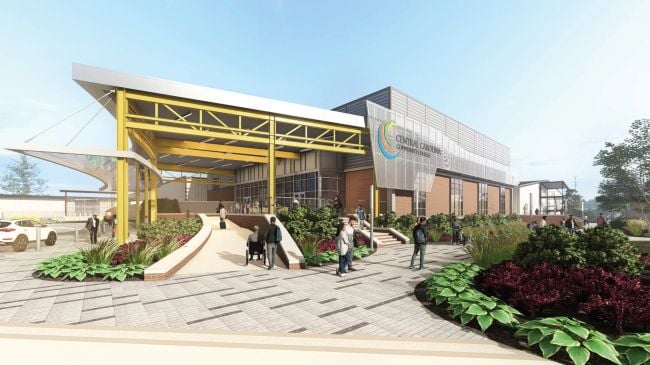
CCCC serves a rapidly growing region that is increasingly integrated into the Research Triangle region, according to Margaret Roberton, vice president for workforce development/chief of staff at CCCC. The Moore Center nearly doubles the Sanford campus’s square footage and includes a new 10,000-square-foot biotechnology building set to open this summer.
Expanding biotech training
Brenda Grubb, chair of the CCCC Biotechnology Department, said that the school's biotechnology programs have experienced substantial enrollment growth in recent years. The new building will allow greater flexibility in class offerings for the school’s Bioprocess Manufacturing Technology degree and certificate programs, BioWork certificate and new Bioprocess Quality Control Certificate.
“We’re excited that this new space allows us to have labs that are more like what is found in the industry,” said Grubb. “Students will gown up and go into a clean area and walk a path through the building that's more like it would be if they were going to work on a job.”
The biotechnology building will house dedicated mammalian cell culture and environmental monitoring labs and bioreactors for upstream processing. It will also include an analytical lab that will be useful for the Bioprocess Quality Control Certificate.
The additional space will allow CCCC to expand course offerings and programs supporting industry needs while also increasing the possibilities for customized training for local biotechnology companies.
Beyond biomanufacturing
In addition to the biotechnology building, the Moore Center includes an additional 180,000 square feet that was the original manufacturing building for Marelli. CCCC recently received $2.5 million from the Golden LEAF Foundation to help fund critical renovations and cutting-edge equipment at the center.
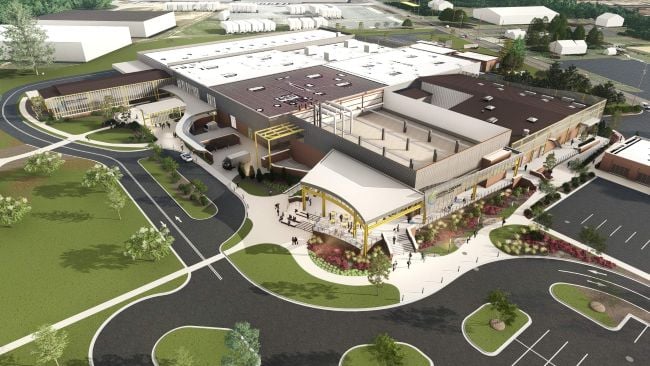
The school plans to begin demolition and renovation of the first 23,000 square feet of that space later this year, with a focus on industry training. This phase of construction will include robotics, welding and industrial skills labs.
“Although industrial system maintenance training is not direct preparation for technicians or quality specialists in biomanufacturing, it equips the personnel who keep these facilities running and equipment operational,” said Roberton. “For the biotechnology companies we work with, as well as the students receiving training, having these resources right next to each other will be a big benefit.”
Roberton noted that for the biotech building, employers collaborated with architects to shape lab design, layout and functionality, ensuring students gain hands-on experience that mirrors real workplace environments. That same collaboration continues for the larger facility, where industry is providing input on the student experience and identifying specialized needs the new space could support.
Meeting workforce needs
Lisa Smelser, executive director of workforce strategic initiatives at CCCC, explained that the college’s programs are co-designed with employers through the Business and Industry Leadership Team (BILT) model, which uses a team of business and industry leaders to identify and prioritize the knowledge, skills and abilities needed three years into the future, aligning curriculum, facilities, and even building design with industry expectations.
For the biotechnology programs, this approach identified the need and helped shape the curriculum for the new Bioprocess Quality Control Certificate. It also led to a deep partnership with Pfizer, which hosts work-based learning students in its Sanford plant and worked with CCCC to co-develop a maintenance technician apprenticeship designed to serve both life sciences and broader manufacturing employers.
“It’s been great to see how the skills that students get through BioWork and our other biotechnology programs are transferable to so many other spaces,” said Roberton. “Employers in federally regulated industries, such as food manufacturing and cosmetics, are also interested in these students, which helps expand potential career paths.”