
It’s Not Too Late to Pivot into NC Life Sciences
Changing careers at any age can be intimidating, especially when pivoting into a specialized and regulated industry like life sciences. But across North Carolina, people from various industries are launching new careers every day.
At a recent career pivots panel discussion hosted by the North Carolina Biotechnology Center’s Career Development Network, three life sciences professionals shared why they left their previous careers, how they broke into the sector, and their advice for others looking to do the same.
Why do people pivot to NC life sciences?
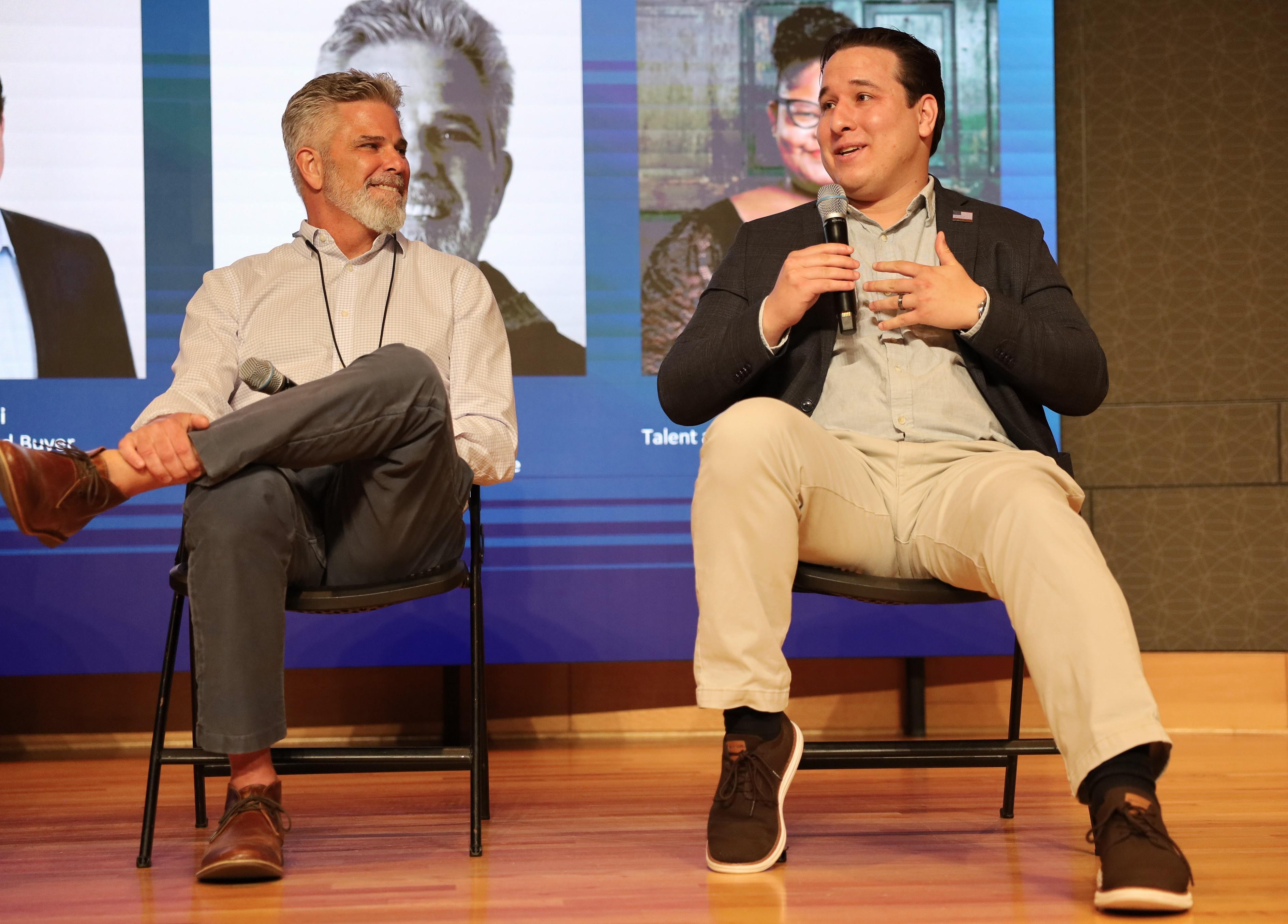
For many individuals changing careers, the decision to enter life sciences isn’t primarily driven by salary or job security; it’s about impact. After a decade in the military, Alex Riccardi, Supply Chain Material Buyer and Planner at CSL, searched for a career that built on his passion for service.
“For me, I wanted a career with meaning. I want to be part of a bigger mission,” Riccardi said.
That clarity of purpose became real when his six-month-old daughter received a vaccine he helped produce.
Jan Luther McDonald, a manufacturing associate at Amgen, grew restless in a security guard role at a life sciences company. Sitting at a desk for eight hours a day and hoping someone would stop by for a conversation didn’t sit right with him.
An apprenticeship opportunity at Amgen changed everything. Now McDonald works on a manufacturing floor producing drugs that, as he describes it, “can save lives.” Amgen’s annual “Amgen Week,” where patients come in to share how the company’s drugs have helped them, reminded Jan of why his work matters.
Chris Luft, Ph.D., moved to North Carolina in 1996 to complete a postdoc at the UNC Lineberger Comprehensive Cancer Center. He was drawn to a career in NC life sciences, in part, because of the personal satisfaction of discovering or understanding something unknown. Then there is the rewarding opportunity to explain the impact of what you discovered to the public.
Unexpected paths into life sciences
None of the panelists took a conventional path to life sciences. Riccardi credits Jacob Key, director of workforce solutions and the MOVE Boots to Biotech program, with opening the door. A SkillBridge internship through the program created the pathway to his current role in supply chain.
While examining two internships, one in life sciences, and one in trucking, Alex was quickly drawn to the global impact of life sciences and the opportunity to improve lives through vaccines.
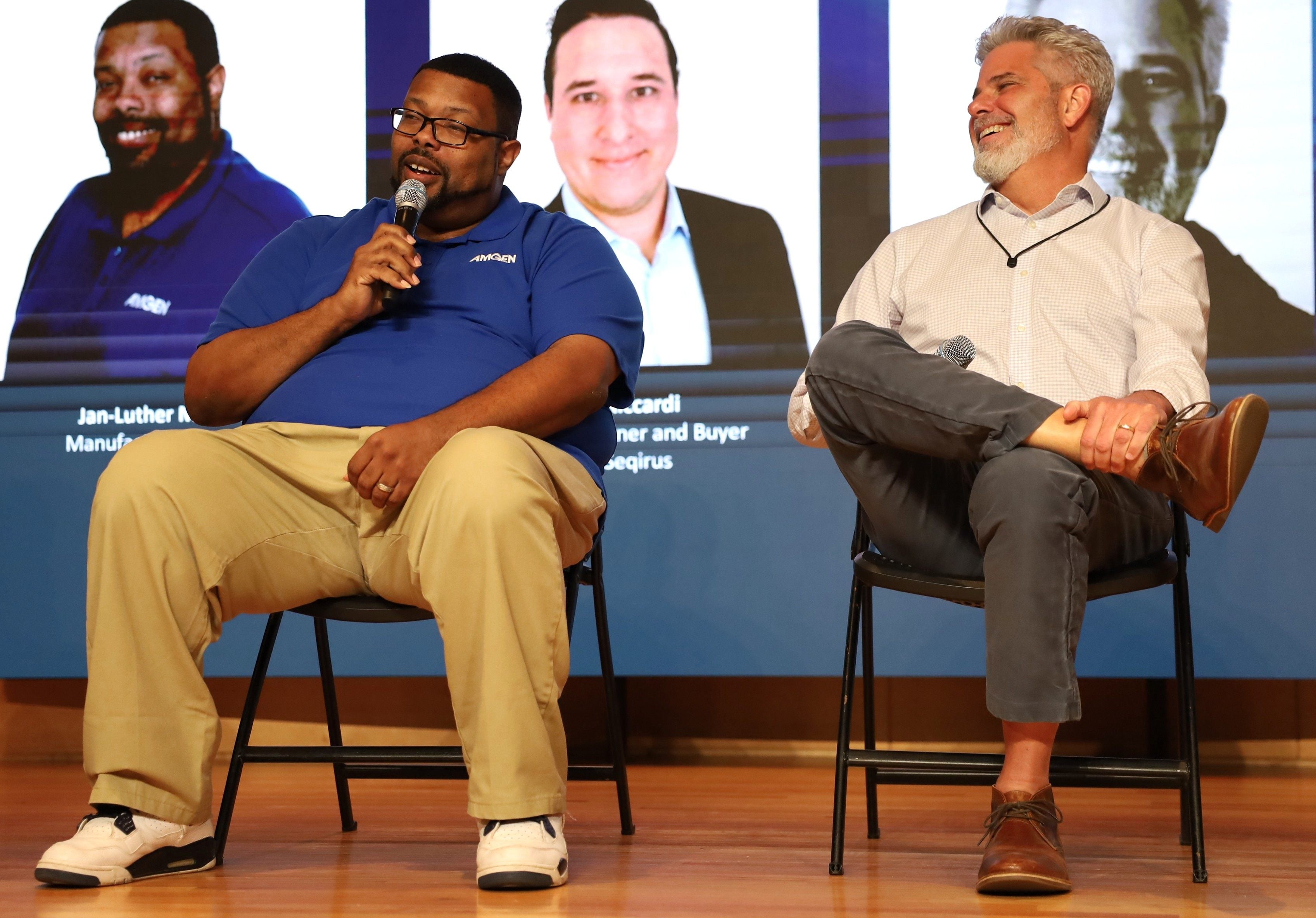
McDonald’s entry into life sciences came from encouragement from former colleagues and the courage to apply for something outside his comfort zone. Out of thousands of applicants, Luther was one of 12 individuals picked to participate in Amgen’s manufacturing apprenticeship program. The program builds on the curriculum of the BioWork certificate program.
After completing BioWork and earning a certification, graduates engage in six additional months of coursework and approximately 2,000 hours of hands-on experience on the manufacturing floor.
Chris transitioned from academia to a biotechnology start-up to experience collaboration across numerous disciplines. He was attracted to opportunities that broadened skill sets to include strategy, fundraising, and intellectual property development.
NC life sciences is broad
Panelists unanimously agree that NC life sciences is a broad industry with multiple pathways to opportunity. Beyond working in the lab, the life sciences industry encompasses opportunities in supply chain, manufacturing, quality control, operations, finance, commercialization, and marketing.
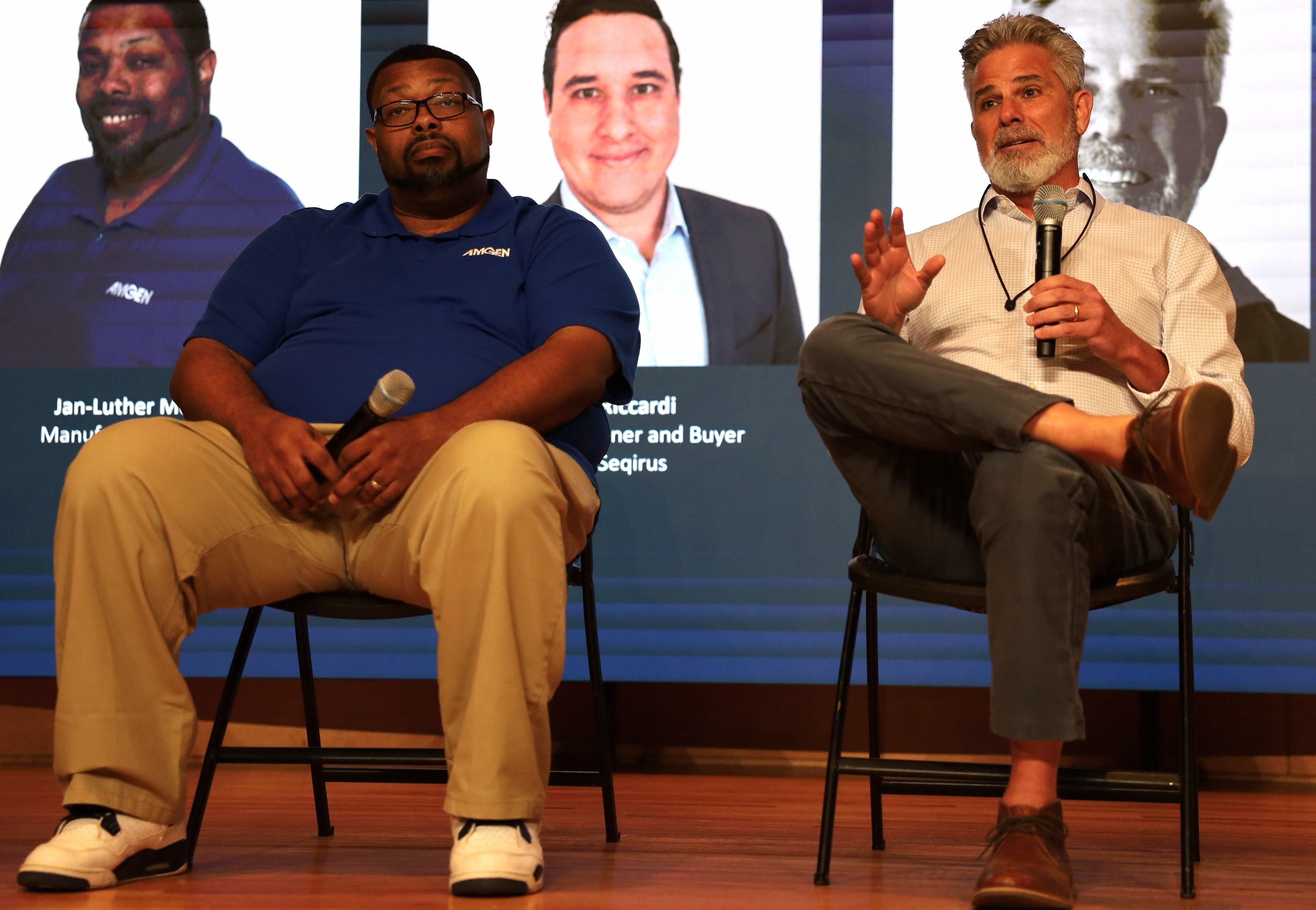
“There is a place for everyone to thrive. It comes down to: what are you passionate about?” McDonald emphasized.
Riccardi reinforced this point from the manufacturing side: “There are broad career pathways in manufacturing. It’s exciting to see everyone collaborate and contribute to improving lives both locally and globally.”
Luft emphasized the immense value of versatile skills. Even if your skills are not science-based (i.e., accounting, finance, sales, legal, or IT), providing examples of exceptional interpersonal communication, teamwork, and management skills to advance scientific accomplishments is highly valuable to growing companies.
Practical advice for career changers at any age
The panelists offered actionable guidance for anyone considering a pivot into life sciences, regardless of their background, age, or education level.
- Don’t count yourself out: McDonald didn’t finish his college degree, but that didn’t disqualify him from an Amgen apprenticeship. “Don’t talk yourself out of doing something you can do well,” he said. “If you can read and follow directions, you can do most life sciences jobs.”
- Be authentic when networking: Luft encourages career changers to be authentic and transparent when initiating conversations to grow their network. “Networking is often a two-way street,” explained Luft. Don’t be afraid to request immediate help and offer to provide support in the future when stability is achieved.
- Use digital tools to articulate your transferable skills: Military veterans and individuals changing careers often struggle to explain how their experience applies to roles in the life sciences. Riccardi recommends using AI tools to help reframe and present non-traditional backgrounds in ways hiring managers can understand. NCBiotech’s MOVE program is also a direct resource for veterans navigating this transition.
NCBiotech resources for changing careers
NCBiotech offers many resources to assist individuals navigating a career pivot. If you are looking to pivot, check out the following resources:
- NCBiotech Career Center
- NCBiotech Company Directory
- NC Life Sciences Career Community on LinkedIn
- Intellectual Exchange Groups
- NCBiotech Career Quiz
View the full recording on the NCBiotech YouTube channel.