

A region in motion: how Southeast NC Is building a life sciences powerhouse
From a new transatlantic cargo route to a resurgent community college biotech pipeline, NCBiotech's southeast office director, Randall Johnson, sees a region hitting its stride
Ask Randall Johnson what makes the Southeastern North Carolina bioeconomy special, and he doesn't hesitate. "The region is rich with assets," he said, a phrase that barely scratches the surface of what's happening across the Cape Fear corridor.
As executive director of the North Carolina Biotechnology Center's Southeast Regional office, Johnson has spent two decades watching the region grow from a cluster of entrepreneurial bets into a genuinely diversified life sciences ecosystem.
The life sciences sectors he supports span a striking range: marine biotech, industrial biotech and bio-renewables, clinical research, contract manufacturing and testing, and agricultural biotech. Each sector of the Southeastern North Carolina bioeconomy draws on distinct natural and institutional strengths of the region — its ocean and waterways, its agricultural scale, its research university, and a deep-rooted entrepreneurial culture that traces back to the 1980s.
A $1.5 billion bet on Wilmington
The biggest single development of the past year or two is also one of the most concrete: the emergence of a dedicated life sciences supply-chain logistics corridor anchored at Wilmington Airport and the N.C. Ports.
Frontier Scientific Solutions has committed close to a billion dollars in infrastructure at the Wilmington Airport, with another half-billion going into the Shannon, Ireland, airport — creating a dedicated cargo air route between the two hubs for the life sciences market.
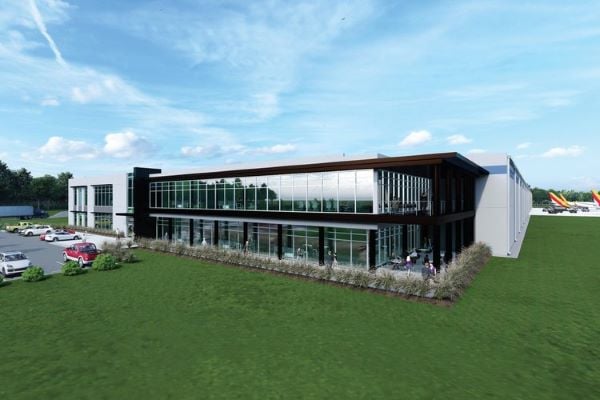
“We're only at the beginning of seeing the benefit from that new investment,” Johnson said. “It stands to benefit all biotech and life sciences companies across North Carolina."
Johnson has been supporting Frontier since 2020, when the concept was still nascent. The formal announcement of that transformational investment came in 2024, but the real-world impact has been unfolding more recently, with cargo flights between Wilmington and Shannon operational for several months. The appeal for North Carolina's biotech and pharma companies is practical: rather than routing temperature-sensitive products through Philadelphia, New Jersey, or Savannah, they can move through Wilmington with shorter logistics chains, better compliance conditions, and direct access to European markets.
Life sciences workforce: from lapsed to leading
If the Frontier investment is the region's headline infrastructure story, workforce development is what Johnson describes as a more personally urgent priority. "More than ever, we're focused on making sure we align the training and skills of our region’s talented workforce with industry’s needs and job opportunities," he said.
That alignment work has intensified through the community college system. The BioWork certificate program, which teaches foundational skills needed to begin a career as a process technician, is offered at Cape Fear Community College. Cape Fear Community College is also preparing to launch an entirely new bioprocess manufacturing program in the fall to add to the BioWork course offering, ChemTech degree program, and related programming.
UNC Wilmington remains a cornerstone of the regional education and innovation ecosystem, with continued program growth in life sciences and health, including Johnson's own role as an adjunct faculty member in the College of Health and Human Services.
The entrepreneurial ecosystem — and a venture challenge that worked
When NCBiotech launched its Venture Challenge, a pitch competition for life sciences startup companies to win mentoring, visibility, and funding, in Wilmington in 2020, one goal was explicit: identify innovators, technologies, and entrepreneurial opportunities the organization didn't already know about. It worked. The 2020 winner, Isosceles Pharma, has continued to raise capital and grow. The program's success drove a statewide expansion across all NCBiotech regions.
Established players like Alcami (formerly AAI Pharma) and Quality Chemical Labs, both companies with Wilmington roots, have continued to grow alongside the newer ventures. The one acknowledged gap is local capital: investment for regional companies has largely come from outside the area, though Johnson says NCBiotech has been effective at identifying and attracting funding when companies need it.
Marine biotechnology, bio-renewables, and a new name to watch
Looking ahead, Johnson sees the marine biotechnology sector as a space with substantial unrealized potential. The term itself is broad, encompassing marine-derived pharmaceuticals, food products like algae, finfish, and shellfish, and energy applications. With the strong research, innovation, and entrepreneurial resources at UNCW, Johnson is eager to see more commercialization, particularly on the food and pharma sides.
One company he singled out: Nautigen, a relatively new venture focused on bioprospecting, identifying biologically active compounds from ocean core samples collected by existing research expeditions. Johnson nominated Nautigen for, and it won, the Coastal Entrepreneur Award for Biotechnology from the Greater Wilmington Business Journal. The approach, he noted, could yield novel pharmaceutical agents and other life sciences applications from marine environments.
The industrial biotech and bio-renewables sectors are other areas Johnson sees primed for growth. The region's agricultural density — it's North Carolina's largest industry — means an abundance of byproducts from food processing, animal waste, and plant matter that could be converted into energy or other useful products. After several early successes in this space, what's needed now, he argues, is more industry partners willing to invest in those conversions and a shift in how those raw inputs are currently managed and valued.
AI enters the picture
In what may be the most forward-looking thread of the conversation, Johnson described growing activity at the intersection of AI and life sciences in the region, particularly AI in drug discovery.
A UNCW researcher, Dr. Ying Wang, who participated in the 2022 and 2024 NCBiotech Venture Challenge and has since received NCInnovation funding, is now exploring how AI can identify novel opportunities for medical products (e.g., high-concentration therapeutic antibody formulations for biopharmaceutical manufacturing), including improving technologies from his earlier venture work.
NCInnovation, which partners with NCBiotech to fund and advance early-stage ideas, has already backed Wang. Johnson sees the potential for a cluster of AI-in-biotech expertise to develop at UNCW and in the broader entrepreneurial community, drawing on connections to the College of Science and Engineering and the Center for Innovation and Entrepreneurship.
"AI is obviously becoming a thread through everything we do," he said. "I'd love to see some of that activity grow here in ways that create a cluster of expertise."
________________________________________
Randall Johnson is Executive Director of NCBiotech's Southeast Regional office.
This article was drafted by AI from the transcript of an interview conducted in April 2026 for our regional blog series. It was edited by NCBiotech staff.