

Reflections from EBRC 2026: Building a stronger biotech ecosystem across America
North Carolina State University and NCBiotech were proud to sponsor and welcome the Engineering Biology Research Consortium (EBRC) 10th Annual Meeting to Raleigh from June 1–3, 2026. The meeting brought together engineering and synthetic biology researchers and leaders from across the country and North Carolina to share the latest advances in agriculture and food innovation, biopharmaceutical development, AI-enabled biotechnology, biocomputing, genomic technologies, and more.
I had the opportunity to participate in a panel discussion reflecting on my experiences working with both EBRC and the National Security Commission on Emerging Biotechnology (NSCEB). It was a privilege to share insights from the Commission's Biotechnology Across America Roadshow and the subsequent Biotech Across America State Symposium in Washington, D.C., both of which reinforced just how much we can accomplish when we bring biotechnology leaders together.
Following the release of the NSCEB's landmark report to Congress in 2025, the Commission launched the Biotechnology Across America Roadshow to engage regional biotechnology ecosystems and better understand their unique strengths, challenges, and opportunities. North Carolina was honored to serve as the first stop on that journey in May 2025.
During the Commission's visit to the state, we had the opportunity to showcase the incredible breadth of North Carolina's biotechnology ecosystem. Commissioners met with leaders from our biopharmaceutical manufacturing sector, the Co-Chairs of the North Carolina General Assembly's Life Sciences Caucus, and traveled to Novonesis in Franklinton to discuss the needed actions to advance food and agriculture innovation, in addition to touring their facilities.
Those conversations highlighted our state's leadership in industrial biotechnology, agricultural innovation, food technology, and advanced biomanufacturing.
I had the chance to further shine a light on the longstanding biotechnology and biomanufacturing workforce development and bioliteracy work taking place around NC at the Biotech Across America State Symposium, highlighting the soon-to-open biotechnology exhibit at the Durham Museum of Life and Science and how the exhibit design and content were informed by a community of biotechnology leaders.
One of the biggest takeaways for me from both the Roadshow and the State Symposium was that, while every state has its own unique assets, we are all working through many of the same challenges. Workforce development, commercialization, infrastructure, bioliteracy, and access to capital consistently emerged as priorities, regardless of geography.
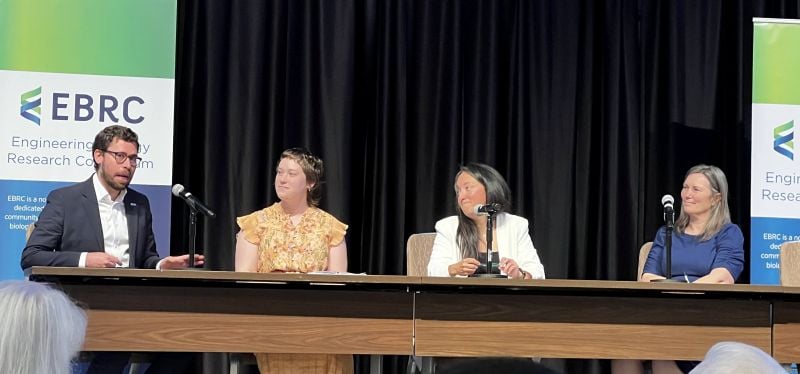
What I found especially encouraging was the willingness of states to learn from one another. Rather than focusing on competition, the conversation shifted toward collaboration. Leaders openly shared successful workforce development models, public-private partnerships, commercialization strategies, and lessons learned from their own ecosystems. It reinforced my belief that there is no single blueprint for building a successful biotechnology ecosystem, but there is tremendous value in exchanging ideas and adapting proven approaches to fit local needs.
During the panel, I emphasized the importance of maintaining the relationships and momentum that were built through both the Roadshow and the State Symposium. These initiatives created meaningful opportunities for regional leaders to connect, exchange ideas, and contribute to a broader national conversation about the future of biotechnology in America. I hope that these conversations continue well beyond the events themselves.
Looking ahead, I believe continued collaboration among industry, academia, workforce partners, and policymakers will be essential to strengthening America's bioeconomy. Success won't be measured solely by stronger workforce pipelines or increased commercialization, but it will also be reflected in our ability to build a more connected national biotechnology ecosystem that shares knowledge, accelerates innovation, and creates opportunities across the country.
North Carolina is well positioned to help lead that effort. With more than 860 life sciences companies, world-class research universities, and one of the nation's strongest biomanufacturing workforces, our state has the talent, infrastructure, and collaborative spirit needed to shape the next generation of biotechnology innovation.
I look forward to continuing to work alongside partners across North Carolina and the nation to help build a stronger, more connected biotechnology ecosystem for the future.
About the author
Megan Damico, Ph.D., is a strategic bioeconomy thought leader, translating emerging technologies and policy into action for stakeholders across North Carolina's life sciences ecosystem. Her expertise is grounded in original research. She authored NCBiotech's foundational bioeconomy definitions and landscape analyses and developed bioeconomy policy solutions previously at the Federation of American Scientists before joining NCBiotech in 2023.