

Plant DNA pioneer Mary-Dell Chilton dies at 87
Mary-Dell Chilton, Ph.D., an American pioneer in plant sciences known as the “Queen of the Agrobacterium,” died on June 24, 2026, in Carrboro, N.C. She was 87 years old.
Chilton’s research in the 1970s and 1980s continues to influence plant biotechnology through her groundbreaking discoveries of the interaction between plants and bacteria.
In the 1970s, she discovered that a soil bacterium transfers DNA into plants, changing assumptions about plant genetics. In trying to disprove that long-held theory, she instead proved in 1977 that Agrobacterium did indeed modify the DNA of its host.
Chilton also created the world's first genetically modified plant in 1982 while leading a research team at Washington University in St. Louis. That achievement garnered much attention around the world, including landing her photo on the cover of Time magazine the following year.
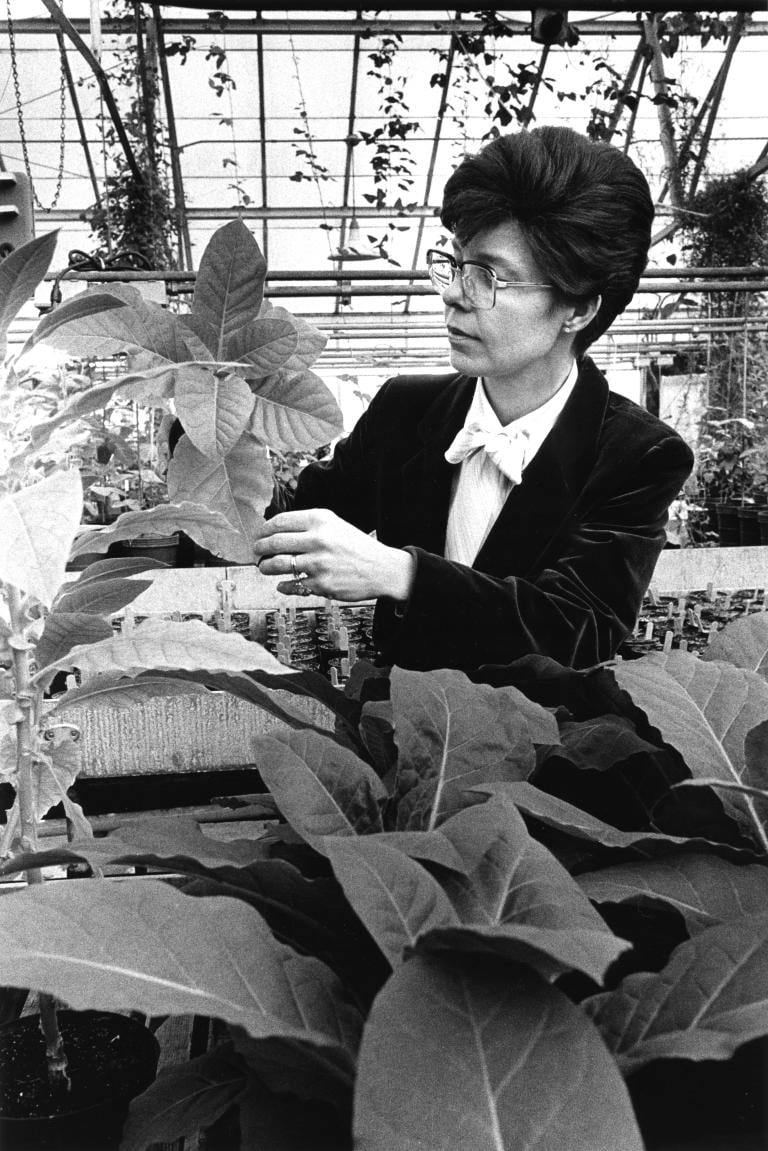
In 1983, Chilton joined CIBA-Geigy, the predecessor of Syngenta, in the Research Triangle Park, according to a biographic article from March 2025 by that company.
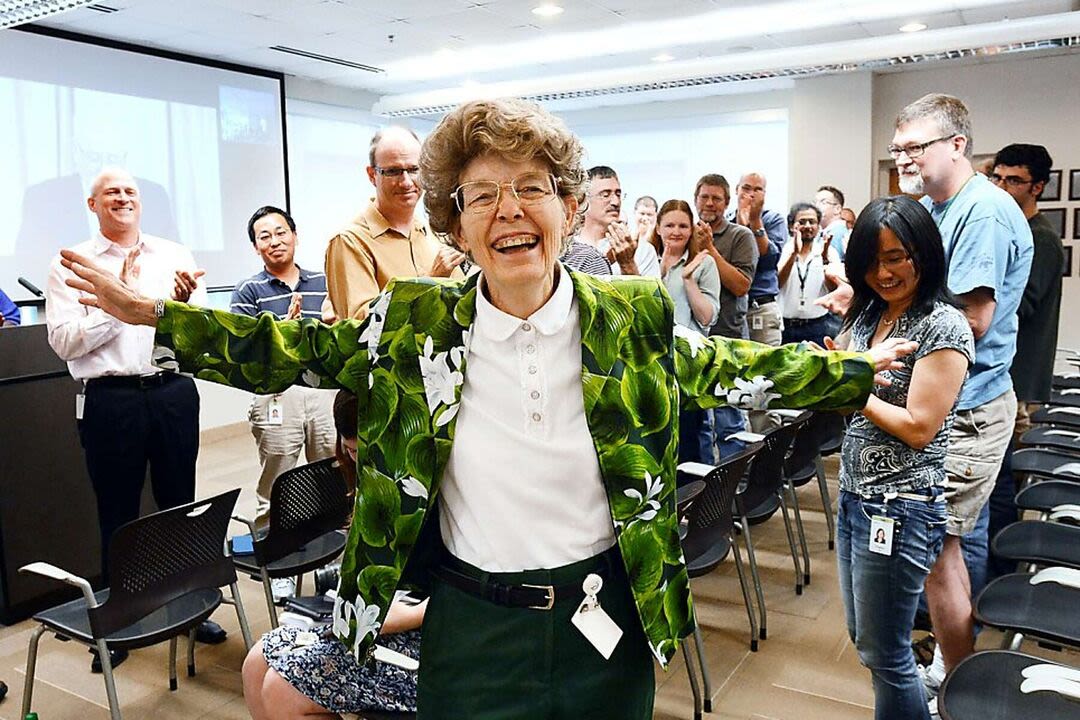
Syngenta also honored Chilton with a YouTube video when she retired in 2018, after 35 years of service there.
"Mary-Dell is a prime example of discovery science that led to industry transforming innovation," said Paul Ulanch, senior director on the Focused Initiatives team at the North Carolina Biotechnology Center. "North Carolina and really everyone is grateful for what she achieved. Using biology and technology to help feed the world is an amazing legacy."
Importance of the Agrobacterium DNA
“When most people think of DNA, they think of the famous double helix structure, but with bacteria things work differently. Genetic information is stored not only in chromosomal DNA but also in circular molecules called plasmids,” according to the Syngenta article. “The reason Chilton and her team hadn’t been able to find evidence of DNA transfer was that they were looking in the wrong place. Just because the chromosomal DNA didn’t transfer doesn’t mean there wasn’t any transfer happening at all.
Researchers at the University of Ghent in Belgium discovered that virulent strains of Agrobacterium contained unusually large plasmids — tumor-inducing or 'Ti' plasmids. This turned out to be the missing piece of the puzzle.
When Chilton and her team looked for fragments of Ti plasmid in the DNA of transformed plant cells, they found them, revealing how DNA transfer actually takes place. By proving their initial hypothesis wrong, they made a major scientific breakthrough.
But she didn’t stop there. Chilton and her team discovered how to disarm the Ti plasmid so that it could transfer DNA without causing crown galls, which led them to create the world’s first transgenic plant.
In 1983, Chilton joined CIBA-Geigy, a Syngenta legacy company, to lead its biotechnology research, helping to develop plants with beneficial genes and seeds to ensure improved genetics could reach growers worldwide. Her research led to the development and refinement of a key technique for the improvement of crops – Agrobacterium mediated transformation (AMT).
AMT revolutionized agriculture. AMT enables scientists to develop crops that carry specific proteins targeting pests and hybrids with multiple protective traits against a range of threats. Even the latest innovations in soybean science still make use of AMT.
The economic and environmental benefits of Chilton’s research are almost impossible to quantify. Crops developed through AMT are genetically protected against pests and diseases, reducing the need for chemical intervention while increasing yields.
Growers can now produce more food using fewer resources, a crucial advantage as we face the challenges of climate change and a growing population.”
Many, many honors
She received numerous honors over her career, including the World Food Prize, considered to be the Nobel Prize of her industry, and the Benjamin Franklin Medal in Life Sciences. Former President Joe Biden awarded Chilton the National Medal of Technology and Innovation in 2023.
Chilton grew up in Southern Pines, N.C., where she was raised by her grandmother, according to her son, Mark Chilton. He wrote in a Facebook post last week that her grandmother modeled independence and entrepreneurship at a time when women faced legal barriers, inspiring Chilton to pursue an ambitious career in science.
"As my mother told me: 'She never said it, but she showed me by example that women can do things in this world,'" Mark Chilton said in a Facebook post. "My great-grandmother ran her own business and kept her own accounts."
He also said that his mother will be remembered as an avid canoeist, outstanding card player, and dog lover.
Editor's Note: Information for this article was sourced from Syngenta, Facebook, WRAL News, and the National Inventors Hall of Fame.