
From High School Graduation to the Manufacturing Floor
How NCGrads2Work is building NC’s life science workforce

As Mackenzie Kirk neared graduation from D.H. Conley High School, she realized that she needed to find a stable job to support herself, and fast. After graduating from high school, becoming a full-time college student wasn’t possible when bills needed to be paid.
With that in mind, Mackenzie’s Career and Technical Education coordinator and counselor at D.H. Conley, Natalie Evans, introduced her to NCGrads2Work — a two-day training program that ultimately opened the door to a full-time career in pharmaceutical manufacturing.
A training program born from a regional need
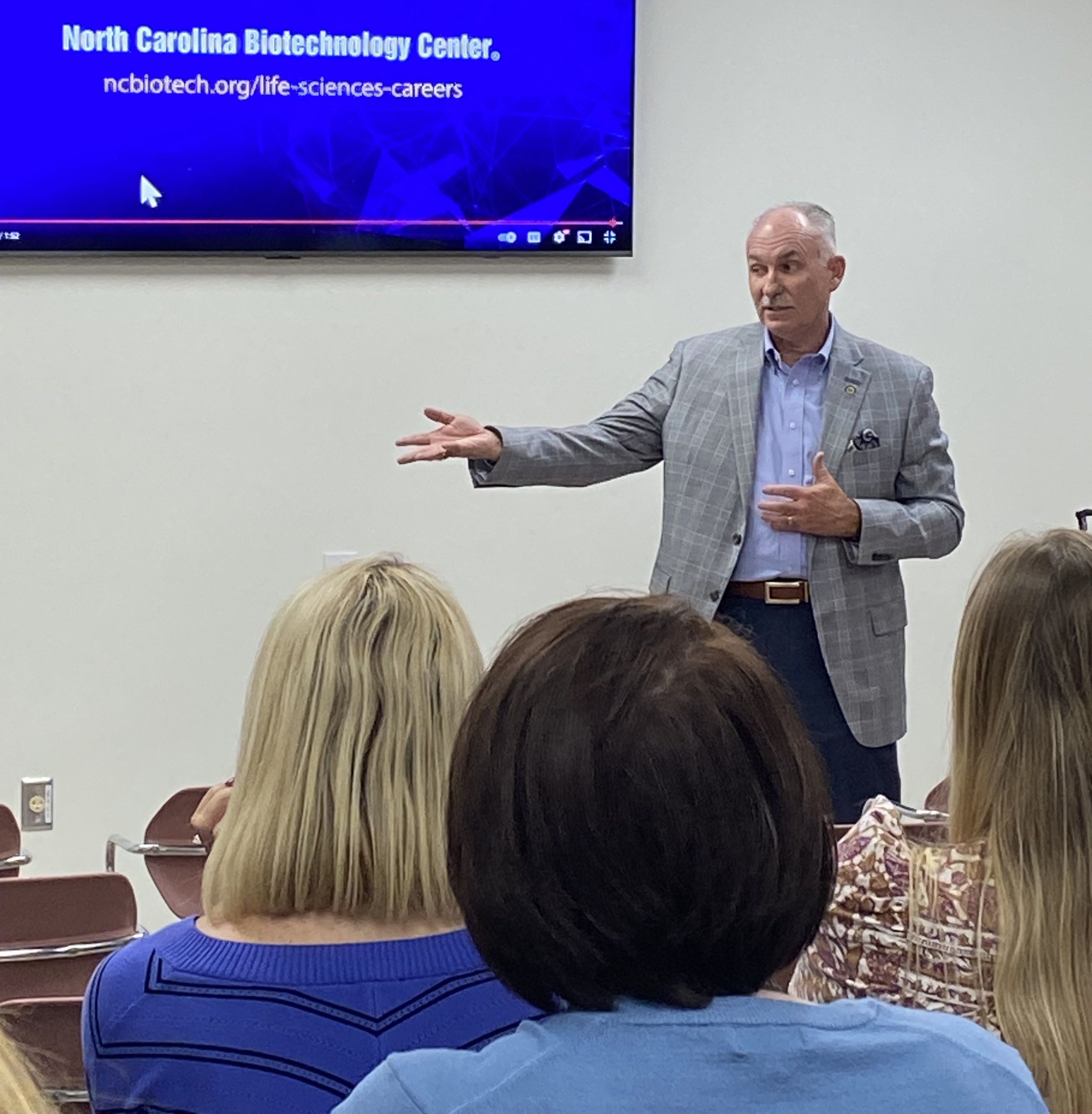
NCGrads2Work was launched in 2019 by the North Carolina Biotechnology Center and local training partners to provide pharmaceutical manufacturers in the Greenville area with access to a reliable pipeline of skilled local talent, while also giving high school graduates a clear path to a fulfilling, well-paying life sciences career.
"Nobody really understands what pharmaceutical manufacturing means if you've never worked in the sector," said Mark Phillips, Vice President, Statewide Operations and Executive Director, Eastern Regional Office. "All the average person wants to do is take medicine and feel better—we don't think about how medicines are manufactured."
What participating students learn
At the heart of NCGrads2Work is an immersive training program held at the Pharmaceutical Services Network at Pitt Community College. The college recently completed a major upgrade to its aseptic training facility, incorporating isolator-environment technology that reflects current industry trends.
The facility also features three virtual reality (VR) training platforms using Meta Quest headsets to introduce high school students to pharmaceutical manufacturing careers. The VR platforms allow students to experience critical concepts, such as laminar airflow, gowning procedures, and cleanroom protocols, in an immersive environment.
"Everything is completely sterilized in an aseptic manufacturing environment except us," said Mark. "So, we must gown ourselves to contain it."
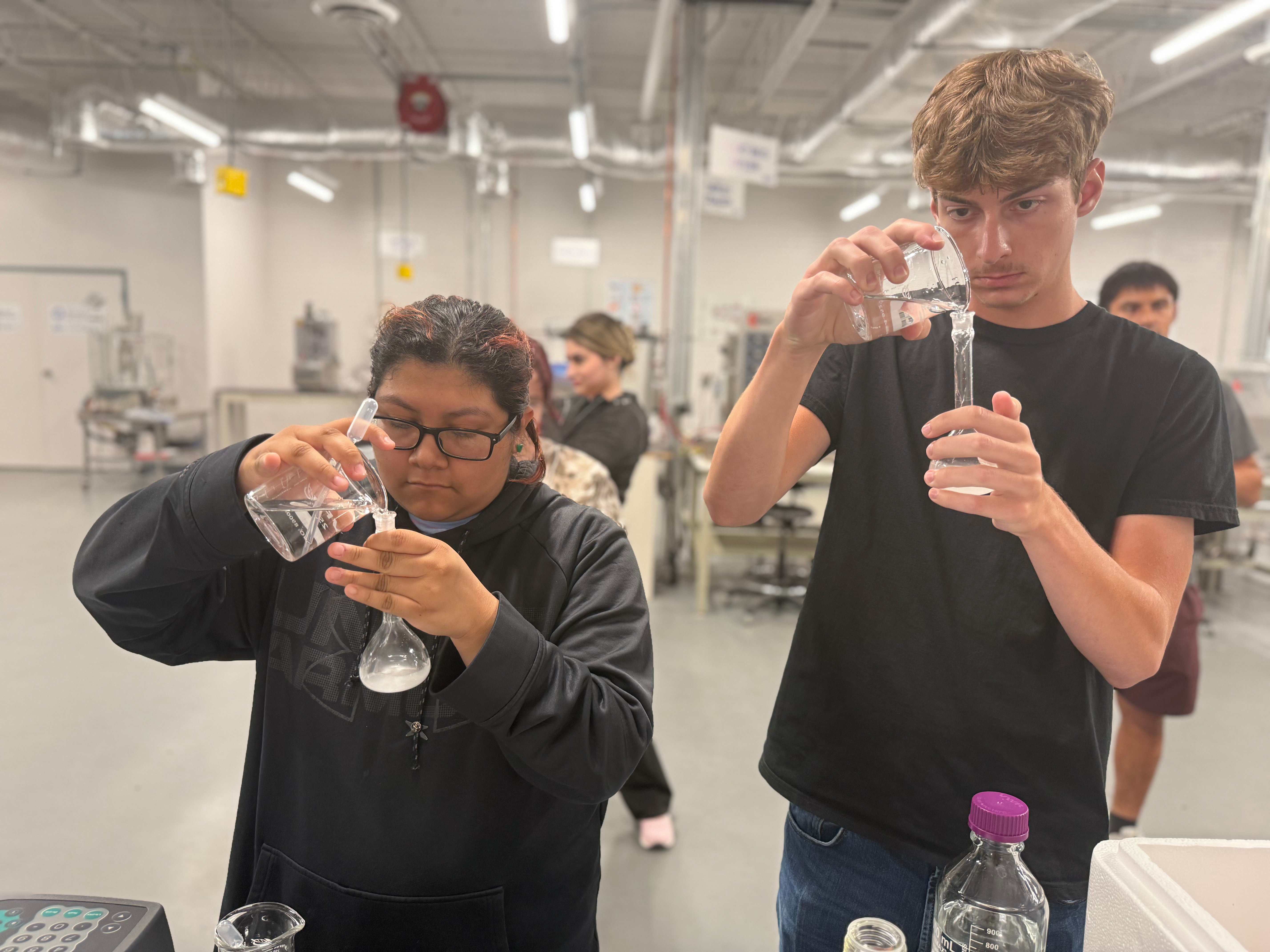 Over two days, program participants learn essential technical skills, such as Good Manufacturing Practices (GMP), Standard Operating Procedures (SOP), aseptic and sterile gowning techniques, the importance of documentation, and the fundamentals of producing solid dose medicine.
For Mackenzie, the entire manufacturing process was eye-opening. "We learned about manufacturing processes, such as how tablets and capsules are made, as well as the process of gowning," she explained. "We learned the whole process of the powder being made for the tablet to the tablet being compressed and bottled for consumers.”
Beyond technical skills, students also develop professional soft skills, including interview techniques and team building.
The post-graduation interview process
Upon completing the NCGrads2Work program, graduates earn a Pharma Expedited Training Solutions certification and are guaranteed a job interview with local life sciences employers.
During Mackenzie’s interview at Catalent, two employees asked her about her clinical research background, her career aspirations, and her NCGrads2Work experience. The conversation felt practical and smooth after two days of learning the language of the pharmaceutical industry. Following two rounds of interviews, Mackenzie was offered a full-time quality assurance position.
Of the 33 high school graduates in the 2025 cohort, 24 secured employment in the biopharma manufacturing sector—a 73% placement rate. Many of the remaining candidates pursued continued education or found employment elsewhere.
NCGrads2Work grows with local life sciences employers
The growth of NCGrads2Work relies on partnerships with employers. Thermo Fisher Scientific — a leading life sciences employer — was a founding collaborator, helping design the curriculum alongside NCBiotech and the Pharmaceutical Services Network at Pitt Community College. As Thermo Fisher expands its Greenville footprint, the program continuously addresses the company’s need for long-term skilled talent.
“We’ve hired several of the students who have gone through the program, and most of them have been promoted within Thermo Fisher,” said Carlin Blakley, HR generalist at Thermo Fisher.
In 2023, Catalent, a leading contract development and manufacturing organization, joined the program. The company’s Greenville facility provides analytical, manufacturing, and packaging operations for oral solid dose medications. That is the environment NCGrads2Work students train for.
In 2026, Fresenius Kabi came on board as a partner. The company specializes in medicines and technologies for infusion, transfusion, and clinical nutrition. With facilities in Wilson County, Fresenius Kabi will manufacture products used in hospitals and clinics throughout the United States and Canada.
Expanding beyond Pitt County
What started as a Pitt County initiative has steadily expanded its geographic footprint. In 2025, NCGrads2Work welcomed applications from students in Wilson, Edgecombe, and Wake counties. In 2026, the program expanded further to include applications from Johnston, Washington, Bertie, Halifax, and Martin counties. In total, NCGrads2Work has trained high school graduates from 11 schools in eight counties.
For more information, visit the NCGrads2Work landing page.