
Apprenticeships Introduce Talent to Opportunities in Life Sciences
 Rheanna Galyean’s journey—from a nervous first-generation college student to a confident full-time technician at one of the world’s leading pharmaceutical companies—is a testament to what happens when enthusiasm and curiosity meet opportunity.
NC community colleges: A driver of opportunity
As a high school senior, Rheanna knew she didn’t want to pursue a traditional four-year degree right away. But one thing was clear: she needed a stable future.
When her advisor presented three certification options (nursing aid, cosmetology, and BioWork), she was immediately drawn to the BioWork certificate program. Through the program, Rheanna learned the foundational skills needed to begin a career as a process technician for a biotechnology, pharmaceutical, or chemical manufacturing company.
“As soon as I started BioWork, I realized that I loved it," exclaimed Rheanna.
Rheanna attended BioWork at Central Carolina Community College via the College Promise Program. The dual-enrollment program gives high school students a head start in the life sciences through hands-on training. In May 2025, Rheanna graduated with both her high school diploma and BioWork Certificate.
“Attending Central Carolina Community College was the best decision I’ve ever made for my future, she exclaimed.”
A support system that helped her grow
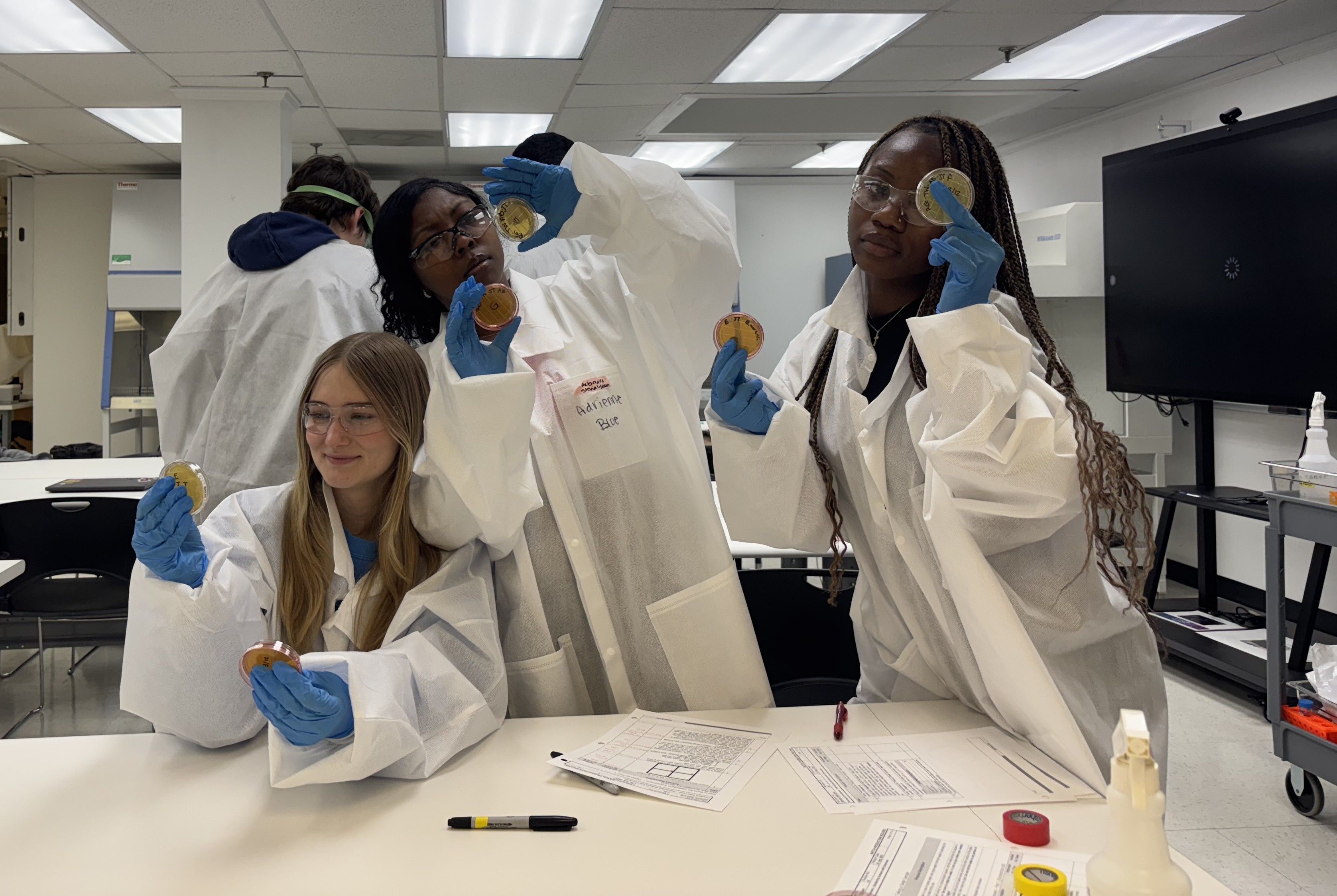 As a first-generation college student, Rheanna entered CCCC without a clear path forward. What she found was faculty who invested in her interests.
Her instructors regularly brought in guest speakers from leading life sciences companies, such as Novo Nordisk, Astellas Pharma and Biogen. The speakers gave students real-world perspectives on career paths, company cultures and training opportunities in life sciences.
The mentorship Rheanna received at CCCC pushed her outside her comfort zone in the best way possible. She attended career fairs and networking events, building relationships with faculty, mentors and life sciences professionals.
The apprenticeship advantage
When Rheanna learned at a career fair that Lilly was hiring apprentices, she went home and did her research. Two weeks after applying online, she was invited to interview. Her interview went well, and she accepted the role of operations apprentice at Lilly.
For Rheanna, the apprenticeship model was the perfect fit. Lilly covered the cost of college courses that counted toward an associate degree she was already working toward. She was able to work full-time while continuing her education.
“I was scared that if I went straight to work after high school, I wouldn’t continue my education,” she admits. “The apprenticeship meant I didn’t have to choose.”
Beyond the financial and educational benefits of apprenticeships, Rheanna discovered something equally valuable: flexibility. When balancing school and 12-hour shifts became overwhelming, she and her supervisor found alternatives, less stressful ways to meaningfully contribute at work.
What she loves most about working at Lilly
Today, Rheanna is part of Lilly’s fill-finish operations, the end of the manufacturing process. As a day shift team member, her schedule is dynamic. Her morning kicks off with a recap of overnight manufacturing activities. Throughout the day, her team pivots as priorities change. Rheanna works on a newer production line, which means continuous learning—and she wouldn’t have it any other way.
“I love how you’re never going to be alone,” she said. “There’s always someone to check over you, read the standard operating procedure with you, and answer your questions.
Lilly’s people-first culture and commitment to cross-training have introduced new hires to the realm of possibilities in life sciences. Rheanna has watched colleagues discover new passions and transition to different teams within just a few months.
As an apprentice, Rheanna’s work ethic didn’t go unnoticed. She expected to be an apprentice for a full year but was promoted within nine months. Rheanna became a full-time operator ahead of schedule due to her natural talent and drive.
Giving back to the NC Life Sciences Community
When Rheanna expressed her love of networking to her supervisor, she was granted the opportunity to represent Lilly at the NC Life Science Career Fair. There, she talked to students and adults curious about life sciences, listened to their stories, and introduced them to career pathways.
“I really love to talk to people, help them in their situation, and encourage them to pursue their passions,” she said.
Advice for the next generation
Rheanna believes that taking the initiative to pursue BioWork helped her to overcome the idea that change is too uncomfortable.
“My development has grown tremendously after exploring what life sciences have to offer, said Rheanna. “I realized that change is sometimes necessary to grow in my career and personal development.”
Rheanna encourages others to understand the differences between an apprenticeship, an internship, and a co-op before jumping in. With this knowledge, one can select the option that best matches their lifestyle and long-term goals.