

QHP Capital takes novel approach to private equity investing in life sciences
Private equity’s reputation for slashing costs and selling companies quickly doesn’t always hold true.
Case in point: QHP Capital. The Raleigh life sciences private equity firm goes by a different playbook, one that helps transform companies into long-term success stories.
“Though we may want to hold onto an investment for five or seven years, what we want to do is be able to execute our strategy against our investment thesis in partnership with that management team, and do it in a 36-month window of opportunity,” said Vern Davenport, a partner at QHP and a longtime Triangle healthcare CEO and investor. “I do think it’s very different, and it’s proven to be successful.”

By all accounts, the approach works. QHP has $4.5 billion in assets under management, and its newest fund, the NovaQuest Private Equity Fund II, raised $500 million in 2022, exceeding its target of $425 million. QHP counts 11 companies in its portfolio and has seen two companies through successful exits.
Focus on long-term value
QHP traces its origins to the former Quintiles, founded in North Carolina and now called IQVIA, which in 2010 spun off its investment company, NovaQuest Capital Management. In 2015, the firm added a private equity strategy, then known as NovaQuest Private Equity. The PE fund spun out in 2022, changing its name to QHP, standing for Q Healthcare Partners, with the Q representing a nod towards both Quintiles and NovaQuest.
QHP’s approach to investing is an outlier in the private equity world. When the firm decides to invest, it looks for opportunities among midsize, founder-led companies, primarily in pharmaceutical services, that have not yet reached their potential.
Then, instead of focusing on cost-cutting to make the company attractive to potential buyers, QHP works to build its management team, processes and systems. The goal is to turn companies at an inflection point into high-performing ones that can prosper on their own.
That’s what has happened at Azurity Pharmaceuticals, a Boston-area specialty pharma company that develops custom drug formulations across 10 therapeutic areas. The privately held company, known as CutisPharma when QHP invested in 2018, has grown from 35 employees to almost 1,000 globally, including 70 in Raleigh, its largest office.
“I don’t think there’s one in a hundred private equity businesses that would have been open to the type of journey that we’ve undertaken,” said Ron Scarboro, Azurity’s CEO, who joined the company as chief financial officer when QHP made its initial investment.
“If you look at QHP’s involvement with this business over the last eight and a half years, it’s been the right balance of what we were trying to build, but also just understanding what the art of the possible is,” he said. “They were open to hearing of a different way of putting the company together and driving value.”
Management system
At the heart of QHP’s approach is its management system. The firm partners with the management teams at its portfolio companies, often bringing in experienced operators to run parts of the business.
QHP and the company set aside time to work through strategy, typically starting with a structured, week-long offsite. That work produces an operating plan, roles and responsibilities, metrics and other tools designed to create accountability.
Davenport spearheaded the management system, basing it on principles he learned and refined as an executive at several healthcare companies, including stints as CEO of Misys Healthcare and chairman and CEO at Medfusion. The system works, he said, because of its simplicity.
“I can look at a sales tracking sheet and know in three seconds how well that sales function is doing,” he said.
Each part of the business develops goals and metrics appropriate to its function. But metrics are limited to no more than 10. And all status updates need to fit on one sheet of paper, with all measures either green or red to indicate whether performance is on track or not, with no hedging.
“So for us, as a private equity firm, we’re no longer interrogating. We see what’s happening and we can bring our experience and expertise in real time to help that company deal with the challenge or capitalize on the opportunity.”
Equipping companies to grow
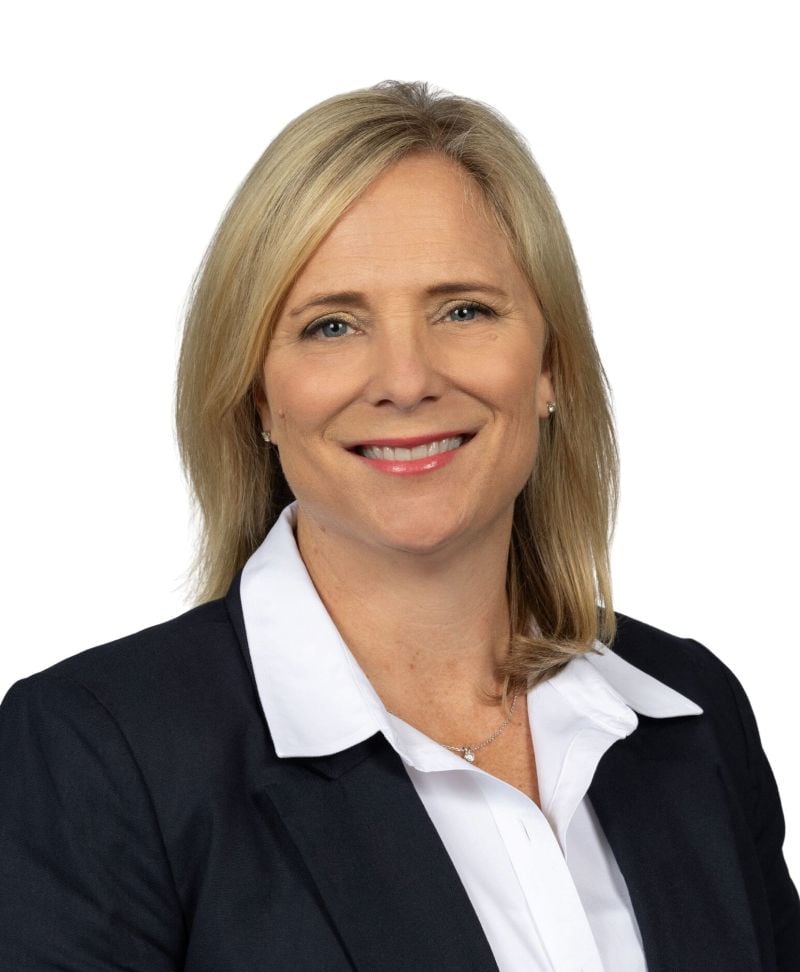
Jeanne Hecht has experienced the QHP management system from both sides. She serves as CEO and chairwoman of Durham-based Lexitas, an ophthalmology clinical research organization that’s one of QHP’s portfolio companies. And she’s a strategic adviser at QHP, helping guide other portfolio companies, as well as contributing to the firm’s investment decisions.
“There’s a massive difference between how QHP engages its portfolio companies and management teams, and even some of the founders who remain in the business, as compared to how other private equity firms engage,” she said.
One of the most distinct differences is that QHP focuses on both revenue and profitability, unlike the standard private equity emphasis on the bottom line. And within revenue growth, QHP examines and improves operations across the board to ensure that companies are well-equipped to grow, she said.
As for its place in life sciences investing in North Carolina, QHP fills a vital role among financing options for companies seeking capital to grow and improve their operations. While the firm’s portfolio companies are located across the nation, the ones located in North Carolina can take advantage of assets and relationships already here, said Mike Carnes, vice president of emerging company development at the North Carolina Biotechnology Center.
“North Carolina is the birthplace of the CRO industry, and in a way QHP is a natural extension of that, with experienced executive leadership who know how to leverage the state’s world-class pharma services workforce,” he said.
“When companies here have a firm like QHP that can provide not only the capital, but also the management expertise, it helps build up our entire life sciences ecosystem.”