

Life Sciences in Eastern NC
North Carolina’s Eastern Region boasts a broad range of life sciences strengths.
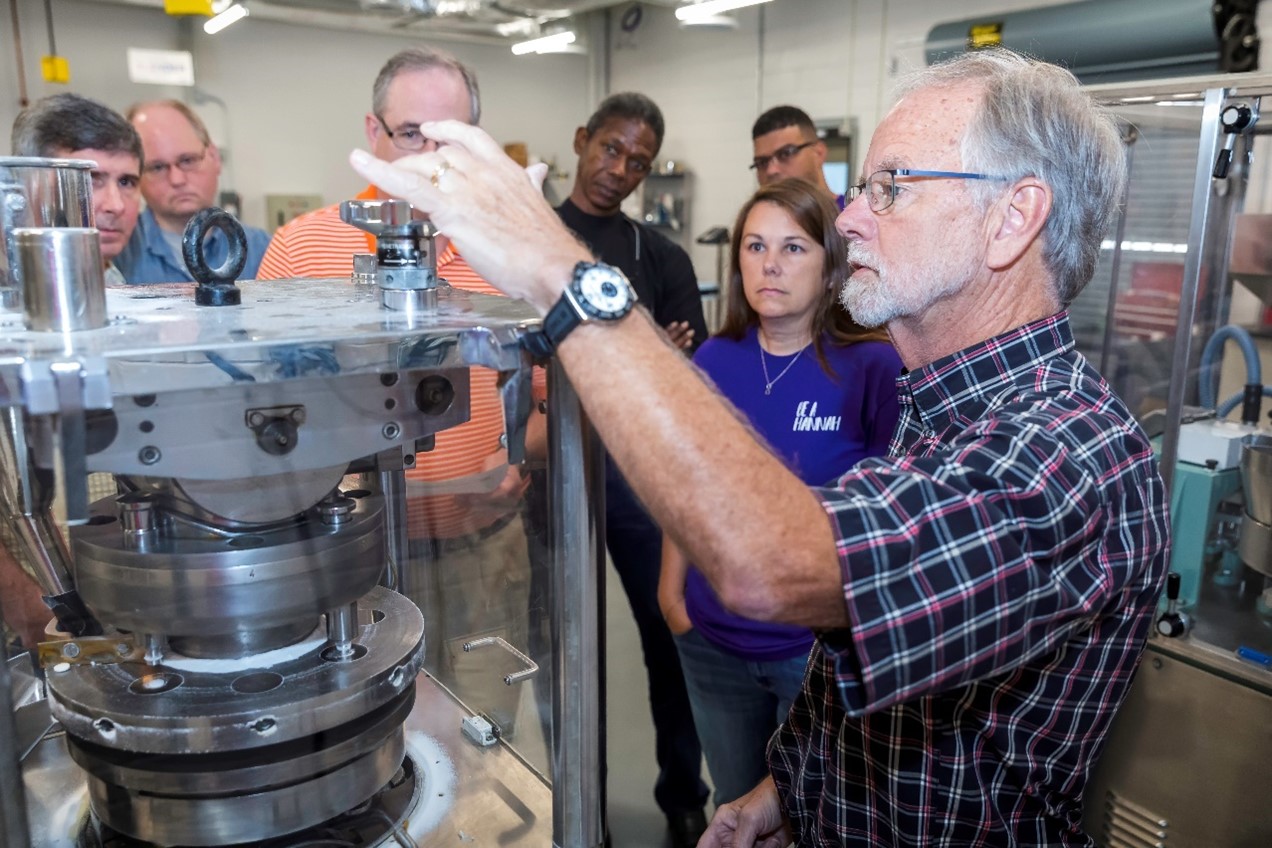
The biomanufacturing capacity of the region supports some of the largest pharma companies in the world. To support the region’s labor needs, East Carolina University’s Eastern Region Pharma Center (ERPC) works in partnership with industry partners and five regional community colleges, and serves as a leader in workforce development for growing this industry sector.
Coastal assets made marine sciences research a mainstay of the region for decades, and commercialization efforts are now led by ECU’s Coastal Studies Institute, UNC Institute of Marine Sciences (UNC-IMS), NC State Center for Marine Sciences and Technologies (CMAST), and the Nicolas School of the Environment, Duke University Marine Lab.
ECU Health, serving over 1.1 million people throughout 29 counties, provides dependable healthcare and innovative research.
Learn more about how your company can grow in North Carolina’s Eastern Region.
Contact
Mark Phillips
Executive Director, Eastern Region
VP, Statewide Operations
Thomasyne Jefferson
Program Manager, Statewide Operations
Eastern Region
Phone: 252-328-9981
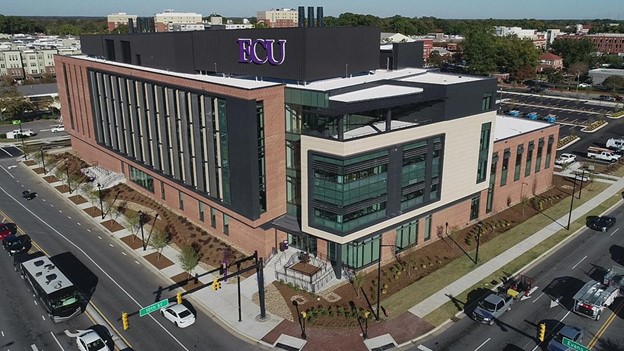
Life Sciences Assets
Eastern NC is home of the BioPharma Crescent and some of the largest contract manufacturing facilities in North America. Notable production facilities include Thermo Fisher Scientific, Catalent, CMP Pharma, Merck, Purdue Pharmaceuticals, Pfizer, Fresenius Kabi, Novo Nordisk, and Grifols.
Health-related research coordinated through ECU includes heart and cardiovascular disease, diabetes and obesity, cancer, and biosensory systems. Access to all companies in Eastern NC is available in NCBiotech's Company Directory.

Community
A group of business, university, and community leaders frequently come together to discuss progress in the region’s life sciences cluster. The East Advisory committee helps to guide the growth of life sciences here. The East takes its networking seriously, with the first regional exchange group, STEM @ Starlight. The region also hosts a laser microscopy group, deftly named Laser TAG.
Working Here
Are you a job seeker looking for job opportunities, or are you looking to advance or change your career? Look for postings on the NCBiotech jobs board or post an opening for your company. Add to your skills through programs offered at East Carolina University, Elizabeth City State University, and Pitt Community College.
The NC Pharmaceutical Services Network and Eastern Region Pharma Center at ECU are ensuring the region’s growing companies have trained workers to fill their new positions. The companies in the Eastern region grow and thrive thanks to the availability of funding, facilities, equipment, and our top-notch and educated workforce.

Living Here
When you’re not networking or training, there are plenty of recreational venues for fishing, hunting, boating, cycling, and other popular outdoor activities. Or take a rest on the sparkling white sands at some of the most appealing seaside communities on the East Coast. Additionally, you don’t want to miss our many golf courses, where you can play 18 holes all year long.

Resources
We work with researchers and companies in our region to apply for NCBiotech’s business funding and university research grants. Those looking for lab or office space can browse NCBiotech's list of research parks and core labs. Market research resources of our Life Science Intelligence unit can also be made available at our Greenville office.
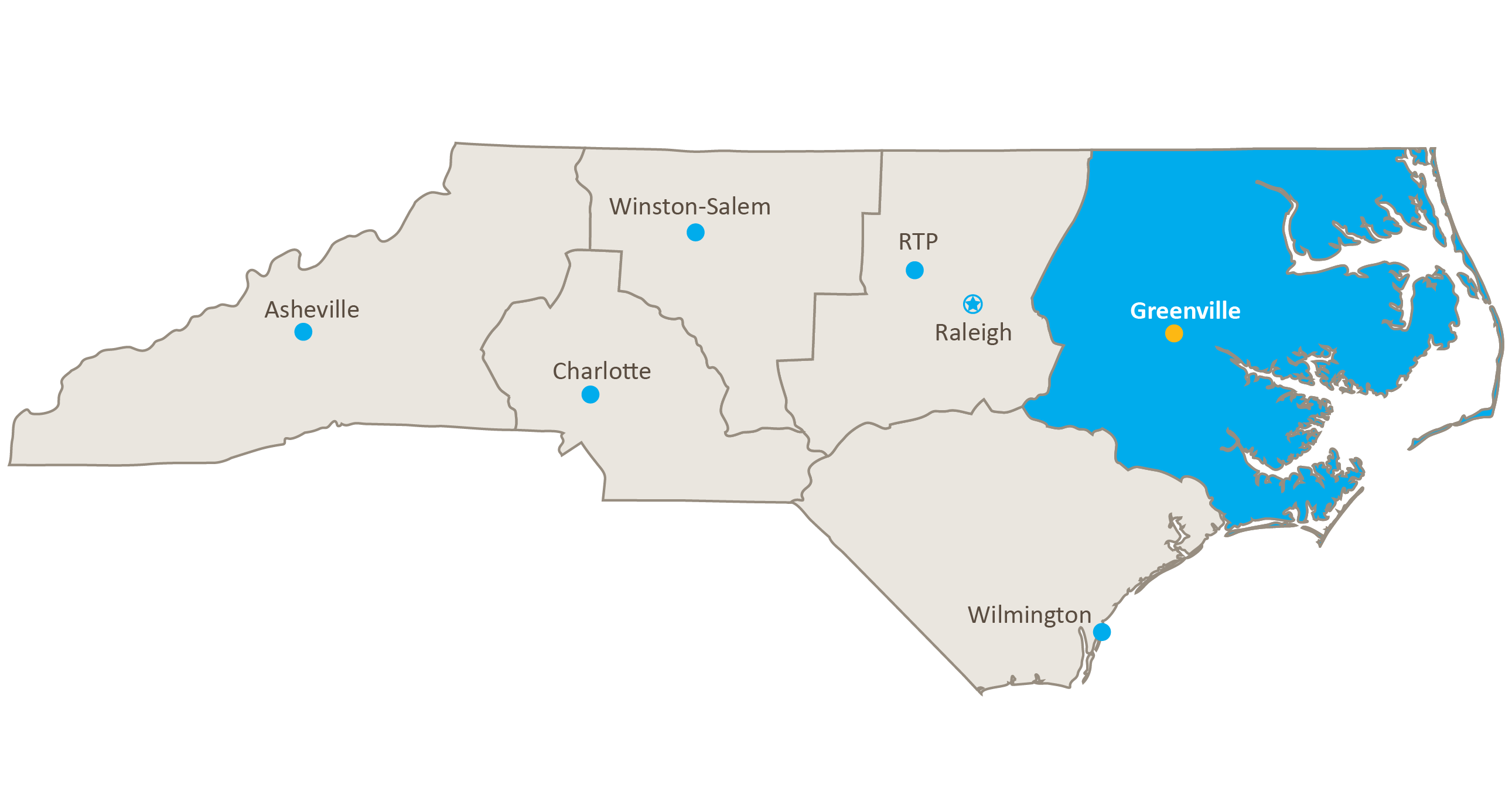
Counties – The Eastern Region includes Beaufort, Bertie, Camden, Carteret, Chowan, Craven, Currituck, Dare, Edgecombe, Gates, Greene, Halifax, Hertford, Hyde, Jones, Lenoir, Martin, Nash, Northampton, Pamlico, Pasquotank, Perquimans, Pitt, Tyrrell, Washington, Wayne, and Wilson counties.
- Proximity to Proximity to I-95, I-587 and I-87 corridors
- 500-mile radius encompasses East Coast from Florida to New York
- CSX intermodal terminal, Carolina Connector located in Rocky Mount
- Foreign Trade Zones offer reduced tariffs
Eastern NC News & Events
Photo Credits:
- Aerial view of downtown Greenville, NC, Aaron Hines, City of Greenville
- Eastern Region Pharma Center (ERPC), East Carolina University
- STEM@starlight, Jeanette’s Pier, East Carolina University
- Pharmaceutical Services Network at Pitt Community College (PSN@PCC), Pitt County Economic Development
- Tar River on the Town Common, Greenville NC, Aaron Hines, City of Greenville Road photo, Mark Phillips, NC Biotech Center